Electrical
Burning Smell or Sparking Outlet: What to Do Right Now
If you smell something burning near an outlet or wall, here's how to decide whether to call 911 or an electrician.
Key Takeaway
If you smell something burning near an outlet or wall, here's how to decide whether to call 911 or an electrician.
Keep reading for step-by-step instructions.
Step One: The Decision Tree
If you smell something burning near an outlet, panel, or switch, work through this in order.
CRITICAL: If you see smoke, flames, or the smell is strong and spreading through the house — get everyone out immediately and call 911. Do not stop to grab belongings. Do not try to unplug anything. Get out.
If there is no visible smoke or fire:
- Do not use the outlet, switch, or appliance connected to that area
- Go to your breaker panel and turn off the circuit breaker for that room or area
- Unplug any devices near the suspect outlet — carefully, without touching the outlet itself
- Open windows if the smell is strong
- Call a licensed Houston electrician and describe what you smelled, where, and what was plugged in
If the smell returns after resetting the breaker, or if the breaker trips again on its own, do not reset it a second time. Leave it off and call an electrician.
WARNING: Resetting a tripping breaker when there's a burning smell is one of the most dangerous things you can do. The breaker is tripping for a reason — it is protecting your home from a fault that could start a fire.
What Does an Electrical Burning Smell Actually Smell Like?
Burning electrical smells are typically described as:
- Hot plastic or melting rubber — the insulation on wires breaking down from heat
- Acrid or sharp — a harsh, nose-burning quality that doesn't smell like food or wood smoke
- Metallic or chemical — sometimes compared to burning metal or a soldering iron
- Fishy — yes, some overheating components smell like fish; this is a known warning sign
The smell may be faint at first, or it may come and go. Faint and intermittent does not mean safe. Intermittent burning smells often indicate a loose connection that arcs under load — which is exactly how electrical fires start inside walls.
Sparking Outlets: Normal vs. Dangerous
Normal (brief arc when plugging in): A tiny blue spark for a fraction of a second when plugging in a device. This is normal electrical contact.
Dangerous (get away from it):
- The spark is sustained — it lingers for more than a split second
- The color is yellow or white rather than blue
- There is an accompanying smell, even briefly
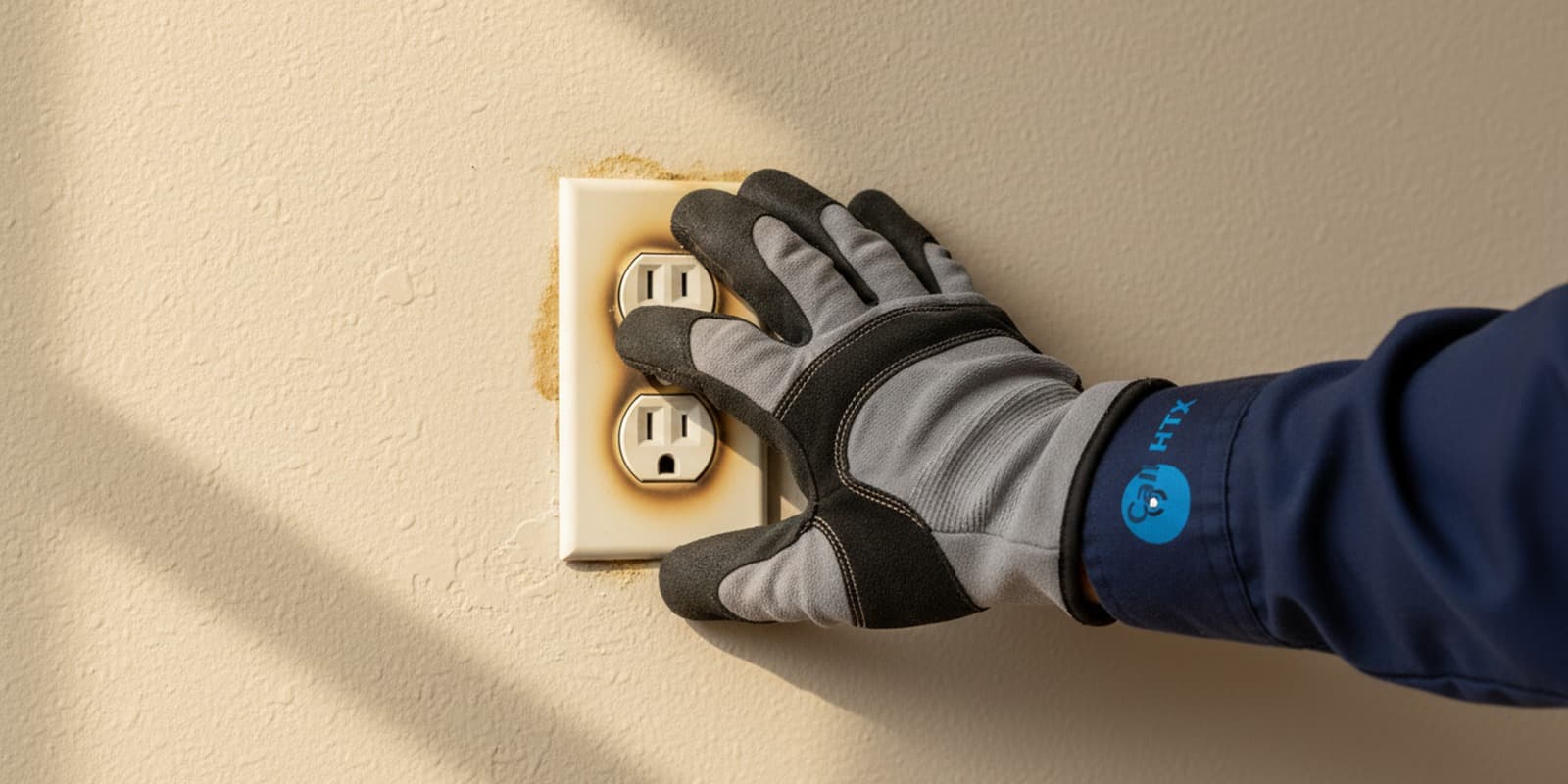
- You see scorch marks or darkening around the outlet face
- The sparking happens repeatedly with the same outlet
WARNING: Yellow or white sparks with any accompanying smell indicate arcing inside the outlet or wiring. This is a fire hazard. Turn off that circuit and call an electrician before using the outlet again.
What causes dangerous sparking:
- Loose wiring connections behind the outlet — the most common cause
- A damaged or worn receptacle that no longer makes firm contact
- An overloaded circuit pulling more current than the wiring can handle
- Water or moisture intrusion into the outlet box
Warm or Hot Outlets and Switches
An outlet or switch plate that feels warm to the touch is not normal. It indicates current is being lost as heat somewhere in the connection.
A hot outlet that also has a burning smell is an emergency. Turn off the circuit immediately.
NOTE: Some dimmer switches run slightly warm under normal operation, but they should never be hot enough to be uncomfortable to touch.
Houston-Specific Electrical Risks
Humidity and corrosion in older wiring. Houston's climate accelerates corrosion on wire connections and outlet terminals. Corroded connections create resistance, which creates heat, which creates burning smells.
Aluminum wiring in 1960s and 1970s homes. Many Houston homes built during this era were wired with aluminum rather than copper. Aluminum expands and contracts more than copper with temperature changes, which causes connections to loosen over time. Loose aluminum connections are a well-documented fire hazard.
Pest damage — rats and squirrels in attics. This is very common in Houston. Rodents chew through wire insulation in attics and wall cavities, exposing bare copper or aluminum. If you have had any pest activity in your attic, a wiring inspection is not optional.
Federal Pacific panels. Federal Pacific Electric (FPE) Stab-Lok panels were installed in many Houston homes from the 1950s through the 1980s. These panels have a documented history of breaker failure — meaning the breaker does not trip when it should.
NOTE: Not sure what kind of panel you have? Open the door of your breaker box and look for the brand name. If it says "Federal Pacific" or "Stab-Lok," call an electrician for an evaluation.
When to Call 911 vs. When to Call an Electrician
Call 911 immediately if:
- You see smoke anywhere in the home
- You see flames or sparks inside a wall, from a panel, or from an outlet
- The burning smell is strong, spreading, or accompanied by visible char
- Anyone in the home feels dizzy, nauseous, or is having trouble breathing
Call a licensed Houston electrician if:
- You smell something burning near an outlet or panel but there is no smoke or fire
- An outlet is sparking repeatedly or has scorch marks
- A breaker keeps tripping in the same location
- An outlet, switch, or panel area feels warm or hot
- You have had pest activity in your attic and have not had a wiring inspection
TIP: When you call an electrician, describe the smell (plastic, metallic, fishy), where you noticed it, what was plugged in at the time, and whether anything has tripped. This helps them come prepared.
What NOT to Do
- Do not ignore a burning smell and hope it goes away
- Do not continue using the outlet until it has been inspected
- Do not try to repair wiring yourself
- Do not reset a breaker that keeps tripping when there is a burning smell
- Do not cover a discolored outlet with a new cover plate and call it fixed
What Does It Cost to Fix in Houston?
| Issue | Typical Cost Range |
|---|---|
| Outlet replacement | $75 – $200 |
| Circuit diagnosis and repair | $150 – $400 |
| Panel replacement | $1,500 – $3,500 |
| Partial or full rewiring | $8,000 – $15,000 |
Need help now?
Find a license-verified electrical professional available in your area.
Get Trusted HelpCommon Questions
Frequently Asked Questions
Why do my outlets smell like they're burning?
The most common causes are a loose wire connection at the outlet, an overloaded circuit, or a damaged receptacle. The smell is heat breaking down plastic wire insulation. In Houston homes, corrosion from humidity and rodent damage to attic wiring are also frequent culprits.
Is a sparking outlet dangerous?
A brief blue spark when plugging in a device is normal. A sustained spark, a yellow or white spark, or any spark accompanied by a smell or scorch marks is dangerous and indicates arcing — a known cause of electrical fires. Turn off the circuit and call an electrician.
Should I call 911 for an electrical burning smell?
Call 911 if you see smoke, fire, or the smell is strong and spreading. If there is no visible smoke or fire, turn off the breaker for that area and call a licensed electrician. Do not wait to see if the smell comes back.
How much does it cost to fix a sparking outlet in Houston?
A straightforward outlet replacement typically runs $75 to $200. If the problem is a damaged circuit or loose connection deeper in the wiring, expect $150 to $400 for diagnosis and repair.
Can old wiring cause a burning smell?
Yes. Older wire insulation becomes brittle and breaks down over time, especially when circuits are run near their capacity. Homes built before 1980 are more likely to have insulation degradation. This is one reason a burning smell in an older Houston home warrants a full wiring inspection.
What is aluminum wiring and is it dangerous?
Aluminum wiring was used in many homes built between approximately 1965 and 1973 as a cost-saving alternative to copper. It is more prone to loosening at connection points over time, which creates heat and arcing. It requires specialized handling and regular inspection by an electrician familiar with aluminum wiring repairs.
Houston areas we serve
Ready to get help?
Get trusted help from a trusted source.
License-verified pros we vouch for, open for business in your area.
Get Trusted Help