Electrical
Breaker Keeps Tripping: When It's DIY vs. Call an Electrician
Why your circuit breaker is tripping, how to diagnose it safely, and when Houston homeowners need a licensed electrician.
Key Takeaway
Why your circuit breaker is tripping, how to diagnose it safely, and when Houston homeowners need a licensed electrician.
Keep reading for step-by-step instructions.
What a Circuit Breaker Actually Does
A circuit breaker is a safety switch that automatically cuts power to a circuit when it detects a problem — too much current, a short circuit, or a ground fault. Without breakers, overloaded wires would overheat, melt their insulation, and potentially start a fire inside your walls.
Breakers are designed to trip. When yours does, that's the system working correctly. The problem is when they trip repeatedly, which means the underlying issue hasn't been addressed.
"A breaker doesn't trip randomly. It trips because something told it to. Your job is to figure out what."
The Three Main Reasons a Breaker Trips
1. Overloaded Circuit
This is the most common cause and the least dangerous. An overloaded circuit simply means you're drawing more electrical current through that circuit than it's rated to handle.
Common scenarios in Houston homes:
- Running a space heater and a hair dryer on the same bathroom circuit
- Adding a window AC unit to a circuit that's already running a refrigerator
- A home office that grew from one computer to five devices on a single outlet strip
TIP: If your breaker trips immediately when you plug in or turn on a specific appliance, that appliance is likely drawing more current than the circuit can handle. Try moving it to a different circuit on the other side of the house.
What to do: Unplug several devices from that circuit, reset the breaker, and redistribute the load.
2. Short Circuit
A short circuit occurs when a hot wire comes into direct contact with a neutral wire. This creates a sudden surge of current that trips the breaker almost instantly.
Signs of a short circuit:
- Breaker trips immediately when reset
- A burning smell near an outlet or fixture
- Visible scorch marks on outlets or switch plates
- A popping sound when a device is plugged in
WARNING: If you smell burning or see scorch marks near an outlet, do not reset the breaker. Leave it off and call a licensed electrician. A short circuit inside a wall can smolder for hours before igniting.
3. Ground Fault
A ground fault happens when a hot wire contacts a grounded surface — the metal housing of an appliance, a wet floor, or the ground wire itself. Ground faults are especially dangerous in kitchens, bathrooms, garages, and outdoor areas where moisture is present.
GFCI outlets (the ones with TEST and RESET buttons) are designed to catch ground faults before the breaker does. If your GFCI keeps tripping, that's the same principle at work.
How to Reset a Tripped Breaker
WARNING: Before resetting any breaker, understand why it tripped. Resetting a breaker without addressing the underlying problem can cause the issue to escalate.
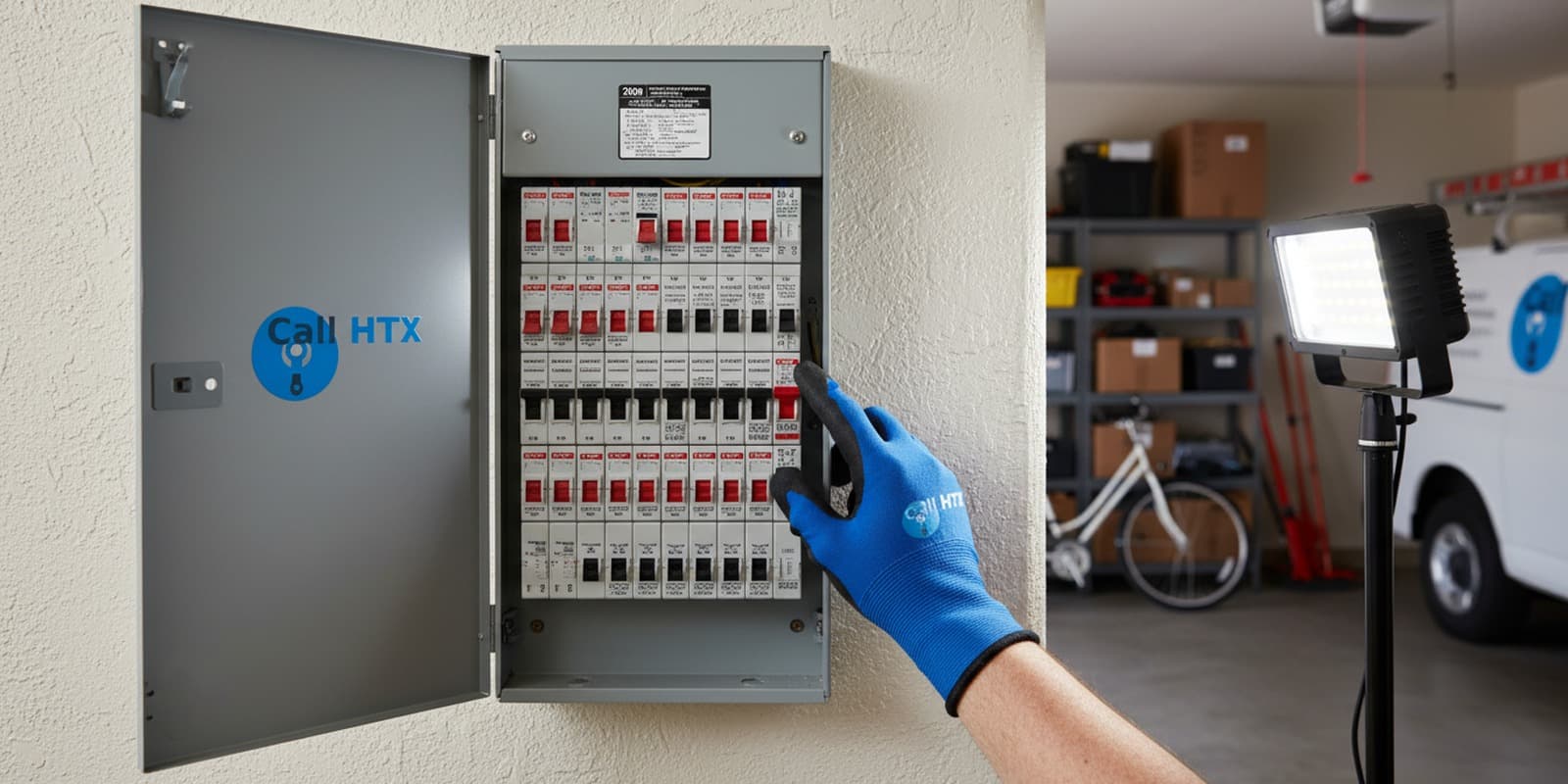
- Go to your electrical panel (usually in a utility room, garage, or hallway)
- Identify the tripped breaker — it will be in the middle position, neither fully on nor fully off
- Before resetting, unplug appliances and devices on that circuit
- Push the breaker firmly to the OFF position first — you must fully reset it before turning it back on
- Flip the breaker firmly to ON
- Restore devices one at a time to identify which one is causing the overload
TIP: Use a flashlight when working at your electrical panel, even if the room is lit. You want a clear view of all breaker positions.
Single Breaker vs. Multiple Breakers vs. Main Breaker
The pattern of tripping tells you a lot about the severity of the problem.
One Specific Breaker Trips Repeatedly
This points to an issue with that circuit — overload, short circuit, or failing breaker. This is the most common and most manageable scenario.
Multiple Breakers Tripping at Once
This can indicate a problem with the electrical panel itself, a failing main breaker, or a larger wiring issue. Call an electrician.
Main Breaker Tripping
CRITICAL: If your main breaker is tripping, do not keep resetting it. A tripping main breaker indicates a serious problem — either the panel is overloaded, the main breaker is failing, or there's a fault in your service entrance wiring. This is an emergency. Call a licensed Houston electrician same day.
Warning Signs of Dangerous Wiring
Call an electrician if you experience any of the following:
- A breaker that trips immediately every time you reset it
- A burning smell anywhere near your electrical panel or outlets
- Outlets or switches that are warm or hot to the touch
- Flickering lights that aren't related to a specific appliance
- Buzzing or crackling sounds from outlets or the panel
- Any evidence of water intrusion near your electrical panel
WARNING: Water and electricity are a life-threatening combination. If your electrical panel is in a garage or utility area that has flooded or taken on moisture, do not touch the panel. Call an electrician and your utility company.
Houston Older Homes and Electrical Panels
"If your Houston home was built before 1990, there's a real chance your electrical panel wasn't designed for the loads modern households put on it."
Houston's older neighborhoods — the Heights, Montrose, Garden Oaks, Meyerland, Bellaire — are full of homes with outdated electrical infrastructure. Two specific issues to know:
Federal Pacific and Zinsco panels: These panels, common in Houston homes built from the 1950s through the 1980s, are known to have defective breakers that can fail to trip during an overload — which means the fire protection you think you have may not actually work. If your panel is a Federal Pacific Stab-Lok or Zinsco brand, get it evaluated by an electrician.
60-amp or 100-amp service: Older Houston homes may still have 60-amp or 100-amp electrical service. A modern household with central AC, multiple large appliances, and home office equipment typically needs 200 amps. Undersized service is a leading cause of chronic tripping.
Need help now?
Find a license-verified electrical professional available in your area.
Get Trusted HelpCommon Questions
Frequently Asked Questions
Why does my breaker keep tripping?
The three main causes are an overloaded circuit (too many devices drawing power at once), a short circuit (hot wire touching a neutral wire), or a ground fault (hot wire contacting a grounded surface). If unplugging devices and resetting doesn't solve the problem, there's likely a wiring issue that needs an electrician.
Is a tripping breaker dangerous?
A breaker that trips occasionally due to overload is doing its job and isn't immediately dangerous. A breaker that trips repeatedly, trips right after being reset, or trips along with a burning smell or hot outlet is a warning sign that something serious is wrong.
How much does an electrician cost in Houston?
Most licensed electricians in Houston charge $75 to $150 per hour for diagnostic and repair work. A breaker replacement typically runs $150 to $250 including labor. A full panel upgrade (100-amp to 200-amp service) generally costs $1,500 to $4,000.
Should I upgrade my electrical panel?
If your panel is older than 25–30 years, uses Federal Pacific or Zinsco equipment, is frequently tripping, or your home has been substantially expanded or renovated, a panel upgrade is worth seriously considering.
How old is too old for an electrical panel?
Most electrical panels have a useful life of 25 to 40 years. If your panel is from the 1980s or earlier, you should have it evaluated by a licensed electrician. In Houston's humidity, corrosion inside panels is also a real concern.
Houston areas we serve
Ready to get help?
Get trusted help from a trusted source.
License-verified pros we vouch for, open for business in your area.
Get Trusted Help