Gas Leak in Houston: What to Do Immediately
If you smell gas, get out first. This guide covers what comes next — from calling for help to getting your gas lines repaired.
Key Takeaway
If you smell gas, get out first. This guide covers what comes next — from calling for help to getting your gas lines repaired.
Keep reading for step-by-step instructions.
If You Smell Gas, Get Out Now
CRITICAL: If you smell gas — leave your home immediately. Do not turn lights on or off. Do not use your phone inside the house. Do not try to find the source. Get outside, get away from the building, and call 911 and CenterPoint Energy at 713-207-2700.
Once you're safe, this guide will help you understand what happened, what comes next, and when to call a licensed Houston plumber for gas line repair.
Signs of a Gas Leak
The most obvious sign is smell — but gas leaks can also be silent or present without a strong odor. Know all the warning signs.
Smell
Natural gas is odorless in its natural state. Utility companies add a chemical called mercaptan to give it that distinctive rotten egg or sulfur smell. Even a faint trace of that odor should be taken seriously.
NOTE: Older adults and people with certain sinus conditions may have reduced sensitivity to the mercaptan odor. Don't rely solely on smell.
Sound
A hissing or whistling sound near a gas line, appliance, or gas meter can indicate a leak. This is especially common near flexible connectors behind stoves and dryers.
Sight
- Dead or dying vegetation in a specific outdoor patch above where a gas line runs
- Bubbling in standing water near your gas meter
- Visible dirt or dust blowing from the ground near gas lines
Physical Symptoms
Exposure to natural gas can cause headaches, nausea, dizziness, fatigue, or breathing difficulty. If multiple people in your home develop these symptoms without another explanation, treat it as a potential gas leak and get outside.
WARNING: Carbon monoxide and natural gas are different hazards, but both are invisible. If you don't already have carbon monoxide detectors in your Houston home, install them.
What to Do: Step by Step
CRITICAL: Follow these steps exactly. The steps you skip — like turning off a light switch — are the ones that can cause a spark and ignite accumulated gas.
- Don't turn anything on or off — no light switches, no appliances, no garage doors
- Leave all doors open as you exit — do not stop to close them
- Get everyone out of the home, including pets
- Move at least 300 feet away from the building
- Once you are safely outside, call 911
- Call CenterPoint Energy's 24-hour gas emergency line: 713-207-2700
- Do not re-enter the home until emergency responders have cleared it
What If You're Not Sure It's a Gas Leak?
If you're getting a very faint smell that comes and goes, treat it as a potential gas leak until proven otherwise.
"When it comes to gas, wrong-and-cautious is always better than wrong-and-confident."
Steps if you're unsure:
- Open windows and doors as you exit
- Leave the home and call CenterPoint at 713-207-2700
- A technician will come to your home, inspect the lines, and confirm whether a leak exists — this service is free
- Do not re-enter until the all-clear is given
Your Gas Shut-Off Valve
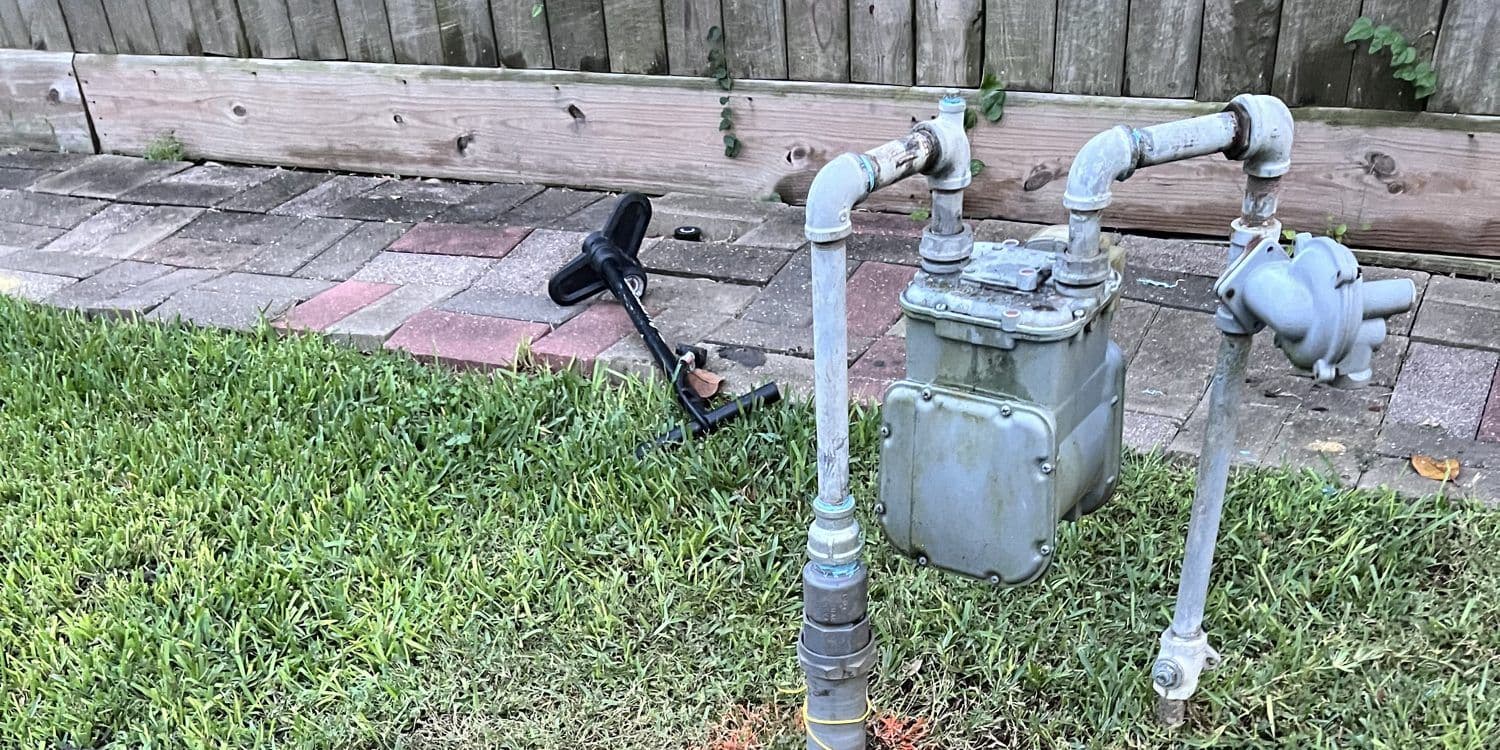
Your home's main gas shut-off valve is located at the gas meter, typically on the exterior of the home near the street side.
NOTE: The shut-off valve requires a special tool (a gas meter wrench or flat crescent wrench) to operate. Most homeowners should not attempt to shut off the gas themselves in an emergency — this is what the 911 call and CenterPoint response are for.
Individual appliances — your furnace, water heater, stove — also have their own shut-off valves directly behind or beneath them.
After the Emergency: Gas Line Repair
CenterPoint Energy will identify and stop an active gas leak. But repairs to your home's gas lines are the responsibility of a licensed plumber.
TIP: Not all plumbers are licensed for gas work. When calling for a quote, specifically ask whether the plumber is licensed for gas line installation and repair in Texas.
Common gas line repairs after a leak:
- Replacement of corroded or aged flexible gas connectors behind appliances
- Repair or replacement of damaged buried gas lines
- Replacement of faulty gas valves on appliances
- Pressure testing of the entire system to confirm no additional leaks
Need help now?
Find a license-verified home service professional available in your area.
Get Trusted HelpCommon Questions
Frequently Asked Questions
What does a gas leak smell like?
Natural gas itself is odorless, but utility companies add mercaptan — a chemical that smells like rotten eggs or sulfur. Even a faint trace of this smell should be taken seriously. If you're not sure what you're smelling, leave the home and call CenterPoint at 713-207-2700.
Can a gas leak kill you?
Yes. Natural gas leaks pose two life-threatening risks: asphyxiation (gas displaces oxygen in enclosed spaces) and explosion (gas accumulates and ignites from a spark). Get outside immediately and call 911.
Who do I call for a gas leak in Houston?
Call 911 first, then CenterPoint Energy's 24-hour gas emergency line at 713-207-2700. CenterPoint will dispatch a technician at no charge. For gas line repairs after the emergency, call a licensed Houston plumber.
How much does gas line repair cost in Houston?
Minor repairs — such as replacing a flexible connector behind a stove — typically cost $150 to $400. Larger repairs involving buried lines or full pressure testing can run $500 to $2,500 or more.
Can I check for a gas leak myself?
You can do a basic check by applying dish soap and water to gas line connections. Bubbles indicate a leak. However, this only works on visible connections. If you smell gas at all, leave the home first — do not attempt a DIY check while the smell is present.
Houston areas we serve
Ready to get help?
Get trusted help from a trusted source.
License-verified pros we vouch for, open for business in your area.
Get Trusted Help