HVAC
Heater Not Working in Houston? Here's What to Do
Your house is getting cold. Here's how to troubleshoot, stay safe, and know when to call an HVAC pro — including carbon monoxide safety.
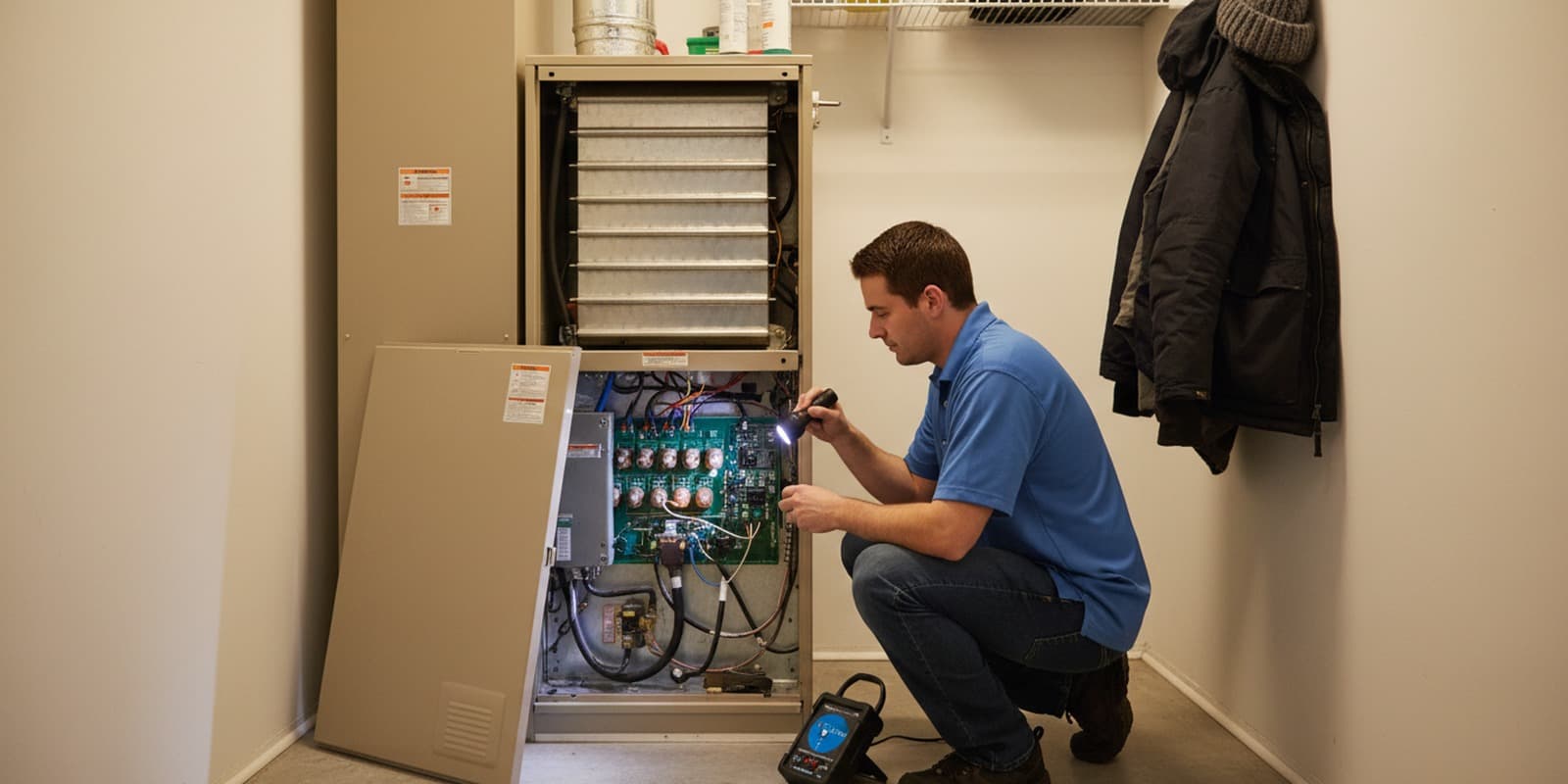
Key Takeaway
Your house is getting cold. Here's how to troubleshoot, stay safe, and know when to call an HVAC pro — including carbon monoxide safety.
Keep reading for step-by-step instructions.
Safety First: Stop and Read This Before You Do Anything Else
CRITICAL: If you smell gas anywhere in your home — rotten eggs, sulfur, or anything that doesn't belong — do not touch any switches, do not turn lights on or off, do not use your phone inside the house. Get everyone out immediately, leave the door open, and call 911 and CenterPoint Energy (713-659-2111) from outside. Do not re-enter until emergency responders clear the building.
If there is no gas smell, continue below.
Carbon Monoxide: The Silent Danger in Gas Furnaces
Before you start troubleshooting, understand this risk. Gas furnaces have a component called a heat exchanger — a metal chamber that separates combustion gases from the air blowing through your home. When that exchanger cracks, carbon monoxide can leak directly into your living space.
CRITICAL: Carbon monoxide is colorless and odorless. Symptoms include headache, dizziness, nausea, and confusion. If multiple people or pets in your home feel sick at the same time, get out immediately and call 911. Do not assume it's a coincidence.
What you should do right now:
- Install CO detectors on every level of your home, especially near bedrooms and within 10 feet of any gas appliance
- Test existing detectors — replace batteries if needed
- If your CO detector goes off, treat it as a real emergency every single time
A cracked heat exchanger is not a DIY repair. It's a reason to shut the furnace off and call a pro the same day.
Figure Out What Kind of Heat System You Have
Houston homes run on three different heating systems, and the troubleshooting steps are different for each.
Gas Furnace
Look for a gas meter outside your home and a large metal air handler unit inside (usually in a closet, attic, or garage). Gas furnaces have a burner that ignites and produces heat directly.
Heat Pump (Most Common in Houston)
If you have a two-unit system — an outdoor compressor and an indoor air handler — and you heat and cool with the same system, you almost certainly have a heat pump. Heat pumps move heat rather than generate it. They struggle below 35°F.
NOTE: Most Houston HVAC systems installed in the last 20 years are heat pumps. If you bought a home and assumed you had a furnace, check the outdoor unit. If it runs in both summer and winter, it's a heat pump.
Electric Resistance Heat
Some older homes and condos use electric strip heaters. No outdoor unit, no gas line, no pilot light.
Basic Troubleshooting: Start Here
-
Check your thermostat setting. Make sure it is set to HEAT, not COOL or AUTO. Set the temperature at least 5 degrees above the current room temperature. Replace the batteries — dead thermostat batteries are one of the most common causes of "no heat" calls.
-
Check the circuit breaker. Go to your electrical panel and look for a tripped breaker labeled AC, Furnace, Air Handler, or Heat Pump. Flip it fully off, then back on. If it trips again immediately, stop — there is an electrical fault.
-
Check the furnace power switch. Most furnaces have an on/off switch that looks like a standard light switch, usually mounted on the unit or nearby wall.
-
Check the air filter. A severely clogged filter can cause a furnace to overheat and shut itself off as a safety measure. If it's gray and matted, replace it.
-
Check the pilot light (gas furnaces only). Older gas furnaces use a standing pilot light. If it's out, you'll find relight instructions on a label inside the furnace door.
TIP: If your furnace starts, runs for a few minutes, and then shuts off before the house reaches temperature, that's called short cycling. Common causes include a dirty filter, a faulty thermostat, or an overheating heat exchanger. Note the behavior and tell your technician exactly what happened.
Houston-Specific: Why Your Heat Failed When You Needed It
The average Houston home uses the air conditioner for 10 or more months a year. The heat runs for a few weeks, maybe less. That means capacitors, igniters, and control boards sit dormant and degrade without ever being noticed. The first cold snap is when everything fails at once — for you and ten thousand other Houston homeowners simultaneously.
The 2021 Winter Storm Uri exposed just how unprepared Houston's housing stock was for sustained cold. Heat pumps failed. Gas furnaces ran out of fuel or lost pressure. Electric systems tripped on overloaded circuits.
NOTE: Heat pumps lose efficiency as outdoor temperatures drop. Below 35°F, most heat pumps cannot extract enough heat from the outside air to warm your home effectively. That's when your system switches to backup heat — electric resistance strips — which is why your electric bill spikes during cold snaps.
Emergency Heat Mode
Heat pumps have an "Emergency Heat" setting on the thermostat. When activated, it bypasses the heat pump entirely and runs only the backup electric resistance strips.
Use Emergency Heat if:
- Your outdoor heat pump unit is visibly damaged or making loud mechanical noises
- You have confirmed the heat pump is not functioning and the house is dangerously cold
- A technician has advised you to use it while waiting for a repair
Do not use Emergency Heat as a regular setting. It costs significantly more to run.
Temporary Heating While You Wait
WARNING: Never use a gas oven, gas stove, charcoal grill, or outdoor propane heater to warm your home. These produce carbon monoxide and can kill everyone inside. This is documented fact from every major winter weather event.
- Electric space heaters are acceptable for temporary use. Keep them 3 feet from curtains, bedding, and furniture. Never leave them unattended.
- Layer up and close interior doors to trap heat in the rooms you're using.
- Let faucets drip if temperatures are dropping below freezing to reduce pipe burst risk.
When to Call a Pro vs. Handle It Yourself
Handle it yourself:
- Replacing thermostat batteries
- Resetting a tripped breaker (once)
- Replacing a clogged air filter
- Relighting a standing pilot light
Call a pro:
- Breaker trips again after reset
- Furnace runs but blows cold air
- Furnace won't ignite after basic troubleshooting
- You hear banging, grinding, or rattling
- Any suspicion of a gas leak or CO issue
- Heat pump running continuously without reaching temperature
What HVAC Repairs Cost in Houston
| Repair | Typical Cost Range |
|---|---|
| Diagnostic / service call | $75 – $150 |
| Thermostat replacement | $100 – $250 |
| Igniter replacement | $150 – $300 |
| Blower motor repair | $250 – $600 |
| Heat exchanger replacement | $500 – $1,500 |
| Full furnace replacement | $2,500 – $6,000 |
| Full heat pump replacement | $3,500 – $8,000 |
TIP: If a technician quotes heat exchanger replacement on an older furnace, get a second opinion on whether full replacement makes more financial sense. On a system over 15 years old, replacement often wins.
Common Questions
Frequently Asked Questions
Why is my heater blowing cold air?
The most common causes are a thermostat set to fan-only mode, a tripped breaker powering one component but not the other, or a furnace that is igniting and then shutting off on a safety limit. Check your thermostat mode first, then check the breaker panel.
How do I know if I have a gas furnace or heat pump?
If you have an outdoor compressor unit that runs year-round and a thermostat with an "Emergency Heat" setting, you have a heat pump. If you have a gas meter and a large indoor unit with a visible burner or pilot light, you have a gas furnace.
How much does furnace repair cost in Houston?
A standard diagnostic call runs $75 to $150. Common repairs like igniter replacement fall in the $150 to $300 range. Major repairs like a heat exchanger can reach $500 to $1,500. Full system replacement ranges from $2,500 to $8,000.
Is it dangerous to run a heater that smells like burning?
A brief dusty smell when you first turn on the heat after months of dormancy is usually normal — dust burning off the elements. If the smell is persistent, chemical, or accompanied by visible smoke, shut the system off and call a technician.
What is emergency heat mode?
Emergency heat mode disables the outdoor heat pump unit and runs only the backup electric resistance heating strips. It is intended for short-term use when the heat pump is damaged. Running in emergency heat for extended periods will significantly increase your electric bill.
Should I have my heater inspected before winter?
Yes, every year. The ideal time in Houston is October or early November — before the first cold snap. A pre-season tune-up costs $75 to $150 and catches failing igniters, dirty burners, and degraded capacitors before they leave you in the cold.
Houston areas we serve
Ready to get help?
Get trusted help from a trusted source.
License-verified pros we vouch for, open for business in your area.
Get Trusted Help