Plumbing
Winter Freeze Protection: How to Prevent Pipe Damage in Houston
A complete freeze preparation guide for Houston homeowners — before, during, and after a hard freeze.
Key Takeaway
A complete freeze preparation guide for Houston homeowners — before, during, and after a hard freeze.
Keep reading for step-by-step instructions.
Why Houston Pipes Are More Vulnerable Than You Think
Houston's mild winters create a dangerous false sense of security. Most homes in the Houston area were built without the pipe insulation or weather barriers you'd find in colder climates — which is exactly why a single hard freeze can cause catastrophic damage.
The February 2021 winter storm left hundreds of thousands of Houston homeowners dealing with burst pipes, flooded floors, and repair bills ranging from $5,000 to well over $50,000.
"Houston homes aren't built for freezes. That's not a complaint — it's just the reality you need to plan around."
Homes in colder climates have pipes routed through insulated interior walls. In Houston, pipes often run through attics, exterior walls with minimal insulation, and under homes with little to no skirting.
NOTE: The threshold most plumbers cite is 28°F for four or more consecutive hours. At that point, uninsulated pipes in exposed areas are at serious risk of freezing and bursting.
Before the Freeze: Your Preparation Checklist
1. Insulate Exposed Pipes
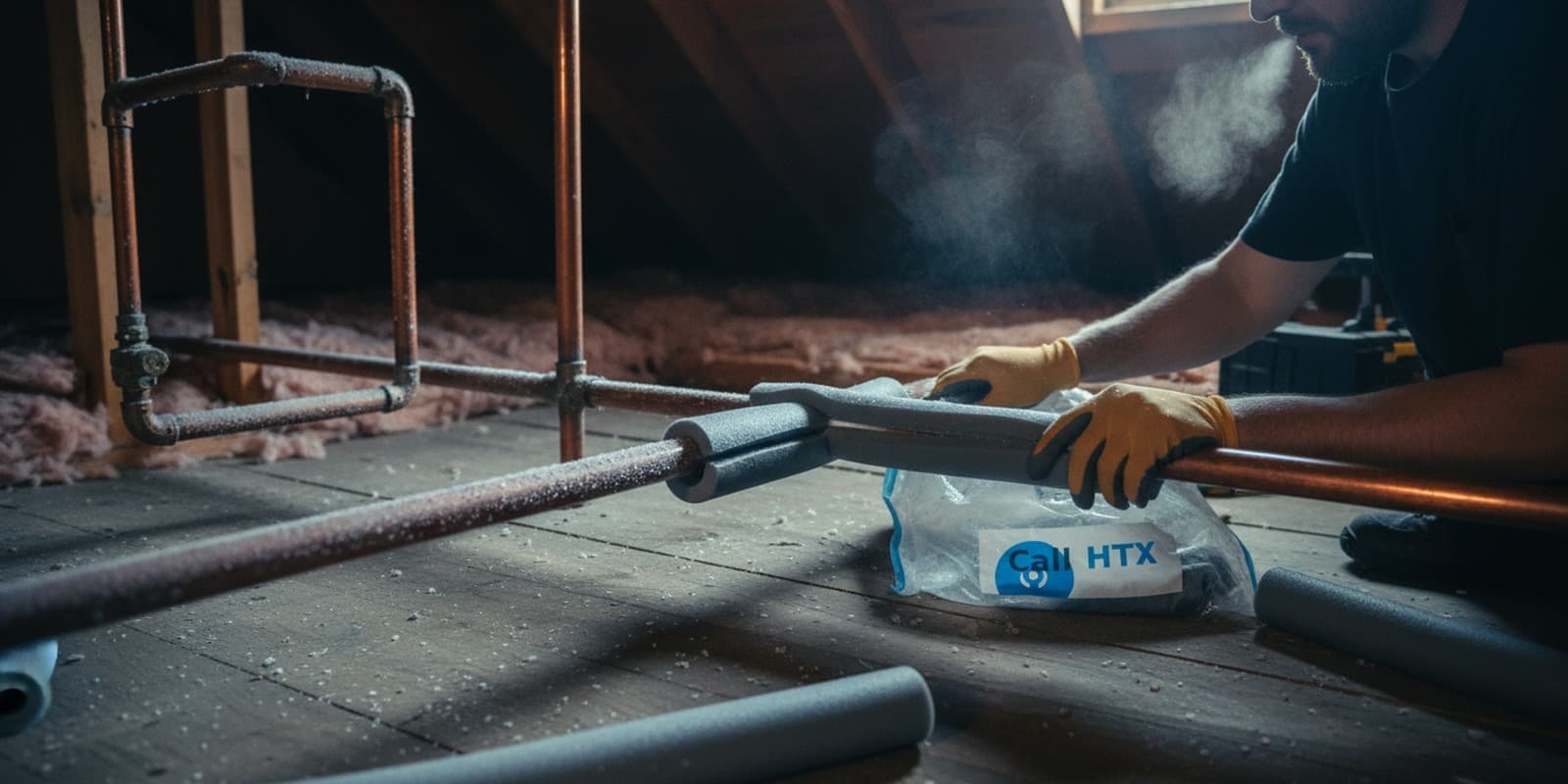
Foam pipe insulation is inexpensive and available at any hardware store. Focus on:
- Pipes in your attic
- Pipes along exterior walls
- Any pipes under a raised foundation or pier-and-beam home
- Pipes near garage walls or in unheated utility rooms
TIP: Foam pipe insulation typically costs $0.50 to $2.00 per linear foot. A few dollars of insulation can prevent tens of thousands in water damage.
2. Locate Your Main Water Shut-Off Valve
Before a freeze warning, know exactly where your main shut-off valve is. In Houston homes, it's usually:
- Near the street in a ground-level meter box
- On the exterior of the home near the water meter
- In a utility closet or garage on the interior
TIP: If you can't find it, your water utility can tell you. Write down the location and make sure every adult in your home knows where it is.
3. Weatherproof Your Home's Exterior
- Install foam gaskets behind exterior outlet and switch plates
- Seal gaps around pipes that pass through exterior walls with expanding foam or caulk
- Cover outdoor hose bibs with insulated faucet covers (around $3–$8 each)
- Disconnect and drain garden hoses before temperatures drop
4. Drip Your Faucets
When temperatures are expected to fall below 28°F, let your faucets drip — both hot and cold sides. Moving water is much harder to freeze than standing water.
TIP: Focus dripping on faucets on exterior walls and in rooms that tend to run cold, like bathrooms above a garage or near an exterior corner.
5. Open Cabinet Doors Under Sinks
Kitchen and bathroom cabinets along exterior walls trap cold air around the pipes underneath. Opening the cabinet doors allows warmer interior air to circulate.
6. Keep Your Thermostat Consistent
Don't drop your thermostat overnight to save money during a freeze. Keep it at a consistent temperature — 65°F or higher — even when you're sleeping or away.
During the Freeze: What to Watch For
WARNING: If you lose heat during a hard freeze, call an HVAC technician immediately. A home without heat during sustained below-freezing temperatures can see pipes freeze within hours.
- Check your attic if accessible — feel along pipes for ice or unusual stiffness
- Monitor water pressure throughout the home; a pressure drop can indicate a frozen section
- If a faucet stops producing water, that line may already be frozen
If Your Pipes Are Already Frozen
CRITICAL: Never use an open flame, blowtorch, or heat gun directly on a pipe. This can cause a burst or a fire inside your walls.
- Turn off the main water supply at the shut-off valve before attempting any thawing
- Open the faucet on the affected line so steam and water can escape as the pipe thaws
- Apply a hair dryer, heating pad, or warm towels to the frozen section — start from the faucet end and work toward the coldest point
- Once water begins flowing, check for leaks along the entire length of the pipe
- If you can't locate the frozen section or the pipe is inside a wall, call a plumber
CRITICAL: If you turn on a faucet and get no water at all during a freeze, turn off your main water supply immediately. A pipe may already be burst and frozen water is the only thing keeping it from flooding your home right now.
After the Freeze: Assessing Damage
Once temperatures rise, the real damage often reveals itself. Watch for:
- Water stains on ceilings or walls
- Wet drywall or flooring
- Low water pressure throughout the home
- A dramatic spike on your water meter reading
If you suspect a burst pipe, keep the main water valve off and call a plumber before turning it back on.
Houston-Specific Challenges
- Pier-and-beam homes are especially vulnerable because crawl spaces allow cold air to circulate freely around pipes
- Older Houston homes in neighborhoods like Montrose, the Heights, and Garden Oaks often have outdated copper or galvanized pipes that are more prone to failure
- Outdoor irrigation systems should be drained and winterized before any hard freeze
- Pool equipment including pumps, heaters, and filter lines should be covered or kept running during a freeze
Common Questions
Frequently Asked Questions
At what temperature do pipes freeze in Houston?
Most plumbers consider 28°F the danger threshold, especially when temperatures stay that low for four or more hours. Because Houston pipes are often uninsulated and exposed, they can freeze faster than pipes in homes built for cold climates.
How much does pipe insulation cost?
Foam pipe insulation costs roughly $0.50 to $2.00 per linear foot at hardware stores. For a typical Houston home, a complete DIY insulation job might cost $50 to $200 in materials. Professional pipe insulation by a plumber typically runs $100 to $500 depending on access and pipe length.
Should I let my faucets drip during a freeze?
Yes. A slow, steady drip — both hot and cold sides — keeps water moving through the pipes and significantly reduces the risk of freezing. Focus on faucets on exterior walls. The cost of a night of dripping is negligible compared to a burst pipe repair.
What do I do if my pipes are already frozen?
Turn off the main water supply immediately. Open the affected faucet. Apply gentle heat (hair dryer, heating pad) starting at the faucet end. Never use an open flame. If you can't locate the frozen section or get water flowing again, call a licensed plumber.
How do I find my outdoor water shut-off valve in Houston?
In most Houston homes, the main shut-off is at the street-level meter box — look for a rectangular or oval cover near the curb. Some homes also have a secondary shut-off on the exterior wall near where the main line enters.
Houston areas we serve
Ready to get help?
Get trusted help from a trusted source.
License-verified pros we vouch for, open for business in your area.
Get Trusted Help