Buying Your Own Equipment and Paying for Installation: What It Really Costs
The short-term savings are real. So is what you give up.
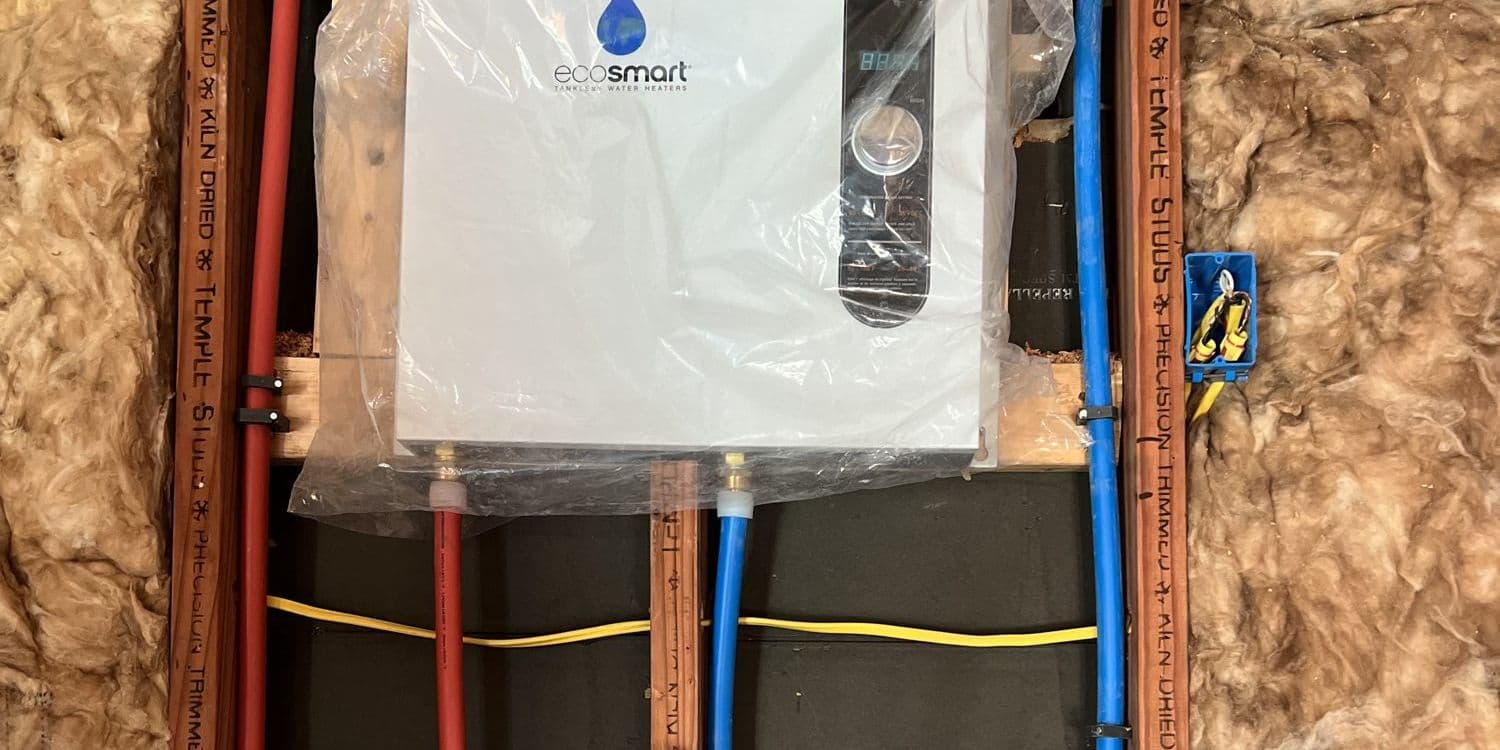
Every tradesperson in Houston gets this question, and most of them get it weekly.
"Can I just buy the equipment myself and pay you to install it?"
It is a completely reasonable thing to ask. Equipment is available online, the prices look great next to a full installed quote, and nobody enjoys feeling marked up. Sometimes the answer is genuinely yes.
But the installed price is not just a box plus labor, and the difference is almost never explained before the money is spent. So here is the honest version, with two Houston tradespeople on how they think about it.
What you are actually buying when you buy installed
Three things come bundled with an installed price, and all three disappear when you supply your own equipment.
1. The manufacturer's warranty — often entirely. Most major manufacturers write their warranty to apply only when the equipment is purchased through authorized distribution and installed by a licensed contractor. Many also require registration within 60 to 90 days, and if that window closes the coverage drops to a much shorter base term.
The unit you bought may be completely genuine. That is usually not the issue. The manufacturer is standing behind the chain — how it reached you and who installed it — not just what is in the box.
2. Anybody's warranty on the labor. No contractor will warranty their work on a part they did not choose, could not inspect, and cannot verify the history of. That is not obstinacy. If it fails in eight months there is no way to establish whether it was the installation or the equipment, and they would be covering something they had no say in.
3. Somebody whose job it is to chase the claim. This is the one nobody thinks about and it is worth the most. A warranty you have to administer yourself — finding the paperwork, proving the purchase, arguing with a manufacturer who has no relationship with you — is worth a fraction of one somebody else administers on your behalf.
How two Houston pros put it
Adam Khordaji, Atlas AC & Heat, has written up how his shop approaches it — including why the warranty conversation belongs before the work rather than after: Buying Your Own AC Equipment Online.
Hristo Panov, ARG Plumbing, a licensed Master Plumber, has written the plumbing version, with water heaters as the example most Houston homeowners actually run into: Buying Your Own Water Heater or Fixtures.
Two different trades, and they land in the same place independently: they stand behind their own work, the terms depend on the equipment and who supplied it, and the time to ask is before anything is bought. That is usually a sign the reasoning is sound rather than self-serving.
Whoever you hire, ask them directly. What they will stand behind, what the manufacturer covers, and who registers the equipment. A contractor who answers that clearly and unprompted is telling you something useful about the rest of the job.
Where buying your own is genuinely fine
This logic does not apply to everything you own, and any guide that pretends otherwise is selling something.
A screen is a screen. A cheap TV and an expensive TV both show the picture. If it dies you unplug it and plug in another one, and nobody is inconvenienced past that evening.
Plenty of car parts are fine. Aftermarket OEM-style parts — a door switch, a radio, a trim piece — are often made to the same spec by the same suppliers. Low stakes, easy to swap, and you find out quickly if it is wrong.
The pattern in both: low consequence when it fails, easy to replace, and fast feedback.
Home services is the opposite on every one of those
The consequence is high. An air conditioner runs 24 hours a day, 365 days a year, in a climate that punishes equipment. A water heater sits under pressure, connected to gas or high-amp electrical, frequently above finished space. When these fail they do not just stop working — they take a room with them, or they leave you in a Houston August without cooling.
Replacement is not easy. Every failure costs you the part, the labor a second time, and whatever the water touched on the way out.
And the feedback is not fast — it is the worst kind of slow. You do not get a warning light. You find out it failed, not that it is failing, and you find out at the least convenient possible moment.
The plan that sounds clever and is not
"They're cheap, I'll just buy two or three."
Think about what that actually means. When the first one fails you are still without hot water or cooling, you are still waiting on the swap, and you are still paying labor. Three budget units installed three times costs more in labor alone than one good unit installed once — and that is before counting the days in between.
What the math usually looks like
| Owner-supplied budget equipment | Contractor-sourced | |
|---|---|---|
| Purchase price | Lower | Higher |
| Manufacturer warranty | Often void | Full term, registered for you |
| Labor warranty | Usually none — ask first | Ask what is covered, and for how long |
| Who fights a claim | You, alone | Someone you can call |
| Realistic service life | Often 3–5 years | 10–15 years with maintenance |
| Second installation | Likely | Unlikely |
The savings are real on day one. They are usually gone by year four.
If the price is the problem, say the price is the problem
That is a far better conversation than the equipment one, and any good tradesperson would rather have it. There are usually real options — repairing what you have for another season, a different size or efficiency tier, or scheduling the work before something fails rather than after.
What is worth avoiding is solving a price problem by removing the warranty. That one feels like savings and behaves like a loan.
Before you buy anything
- Read the actual warranty document, not the seller's listing. Search the brand plus "limited warranty" and look for the words authorized dealer or licensed contractor.
- Ask the installer up front what they will and will not warranty on owner-supplied equipment. A straight answer here tells you a lot about who you are dealing with.
- Ask who registers the system. It is the most commonly skipped step in the entire process and it silently shortens coverage.
- If you have already bought it, bring the model number and the purchase paperwork to the contractor before any work starts. A good one will tell you honestly where you stand.
Need a pro?
Need a verified Houston general pro?
Every pro on Call HTX is license-verified and someone we vouch for. Connect and call them directly.
Get Trusted HelpHouston areas we serve