Sewer Line Replacement in Houston: Signs, Cost, Process
Why Houston's clay soil and old cast iron wear out sewer lines, how to tell repair from replacement, tunneling vs. trenching, City permits, and what the job typically costs.
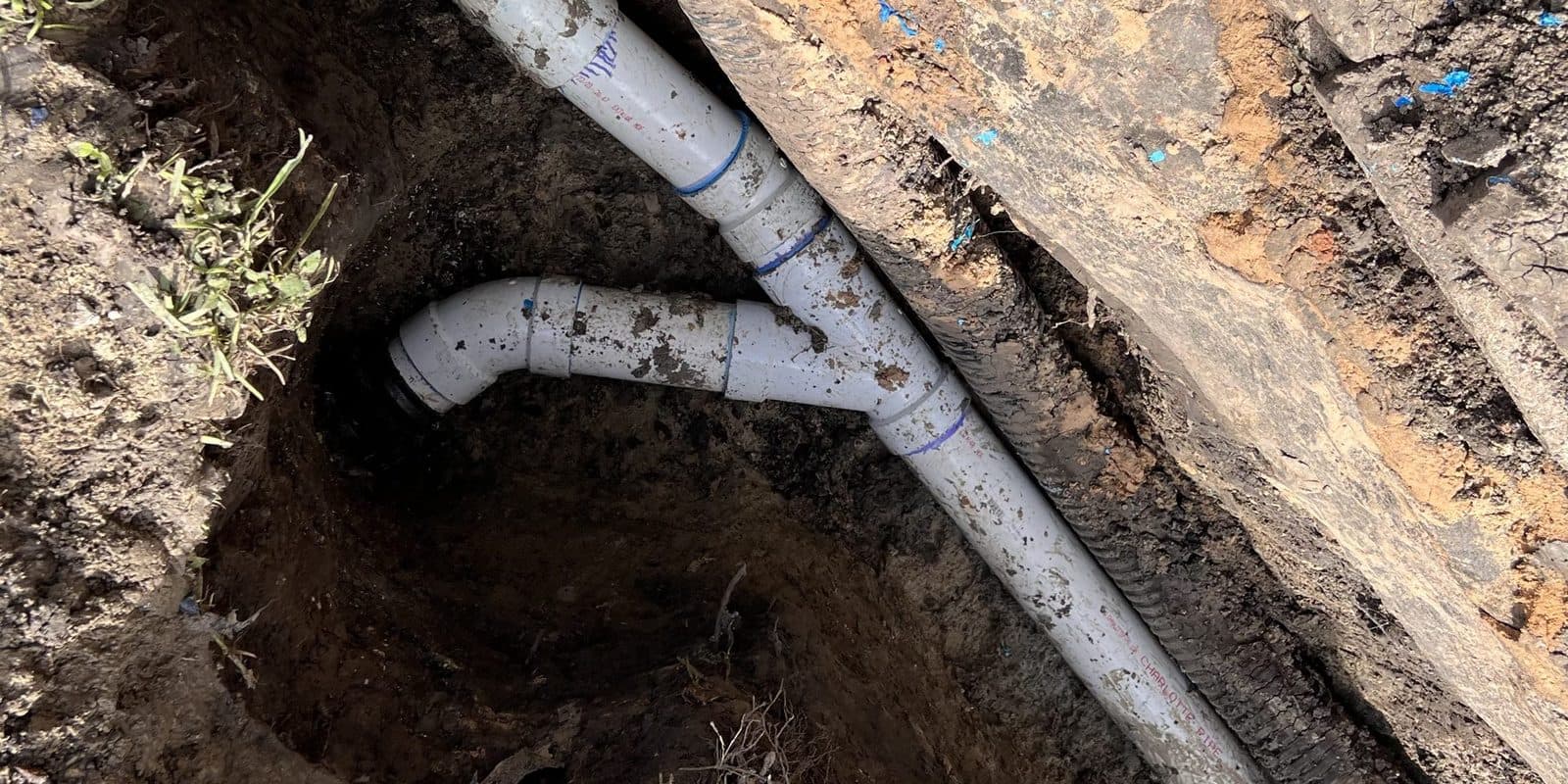
Why Houston Sewer Lines Wear Out
Sewer line replacement in Houston is one of the biggest plumbing jobs a homeowner will ever pay for, and one of the least understood. The pipe is buried, often under your slab, and you only think about it when something smells, backs up, or cracks.
If your house was built in the 1960s, 70s or 80s, there is a good chance the main sewer line is still the original cast iron or clay pipe. Those materials were standard at the time. They were never meant to last forever, and Houston is hard on them.
"When cast iron starts to go, it doesn't fail all at once. It gives you signs. The homeowners who catch those signs early save thousands."
— Hristo Panov, ARG Plumbing
Hristo is a Master Plumber (RMP 44267) and one of the pros we vouch for. Sewer line replacement is the core of his work, so this guide leans on what he sees in the ground.
What Houston Soil and Trees Do to Old Pipe
Three things work against a Houston sewer line at the same time.
Expansive clay soil
Much of Houston sits on clay that swells when it is wet and shrinks when it dries out. Every drought and every heavy rain moves the ground a little. Over decades, that movement pulls joints apart, cracks clay pipe, and puts stress on the line where it runs under the foundation.
"Houston's expansive clay soil is brutal on buried pipes. It shifts with every dry spell and every heavy rain we get."
— Hristo Panov, ARG Plumbing
Cast iron and clay pipe
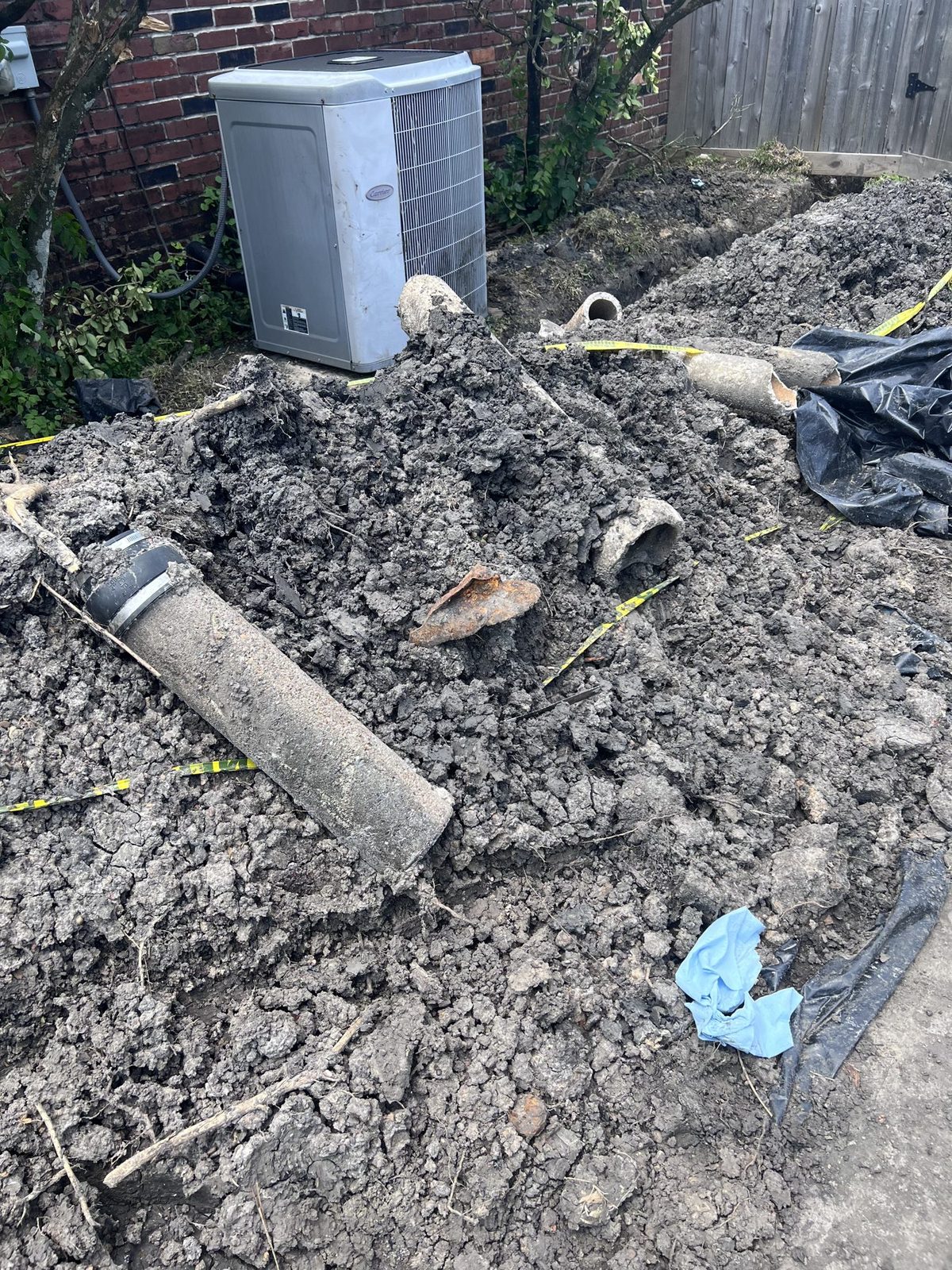
Cast iron rusts and scales from the inside until the opening narrows. Clay pipe was laid in short sections, and every joint is a weak point. Neighborhoods built out from the 1950s through the 1970s, such as Meyerland, Westbury, Sharpstown and Spring Branch, have a lot of both.
Tree roots
Live oaks, magnolias and crape myrtles send roots toward moisture. A cracked joint in a sewer line is a steady supply of water and nutrients. Roots get in, grow, and keep coming back no matter how many times the line is cleared.
Signs Your Sewer Line Needs Replacing
One slow sink is usually just that sink. These signs point at the main line instead:
- Every drain in the house is slow at once. Toilets, tubs and sinks all sluggish together means the shared main line is the problem.
- Sewage smell in the yard or near the foundation. The sewer is supposed to be a sealed system. A rotten-egg smell outside means something has cracked or separated.
- A strip of grass that is greener than the rest. A slow underground leak feeds the lawn above it, often in a line between the house and the street.
- New foundation cracks near where the line runs. A leaking line under the slab can wash out the soil that supports it.
- The same backup keeps coming back. If the line has to be cleared every few months, the pipe itself is broken, bellied or full of roots.
On that last one, Hristo does not mince words:
"At some point, you're just paying to kick the can down the road."
— Hristo Panov, ARG Plumbing
WARNING: If sewage is coming up through a drain right now, stop using water in the house and follow our sewer backup emergency guide. Replacement planning can wait until the house is safe.
Repair or Replace? Start With a Camera
You cannot tell from the outside whether you need a spot repair, a full replacement, or nothing at all. A licensed plumber runs a camera through the line and shows you what is down there: roots, cracks, offset joints, a belly where the pipe has sagged, or a collapse.
"A camera inspection is the only way to know for sure."
— Hristo Panov, ARG Plumbing
TIP: Ask to watch the camera feed and to get a copy of the video. A plumber who is confident in the diagnosis will show you exactly where the damage is and how far along the line it runs.
As a rough rule, one bad section in an otherwise sound line can often be spot-repaired. When the camera shows damage in several places, or the pipe is cast iron scaled nearly shut, replacing the whole run is usually the better money.
How Sewer Line Replacement Works in Houston
Most Houston homes sit on a slab, so the job usually has two parts: the run across the yard, and the part under the house.
In the yard: trenching or trenchless
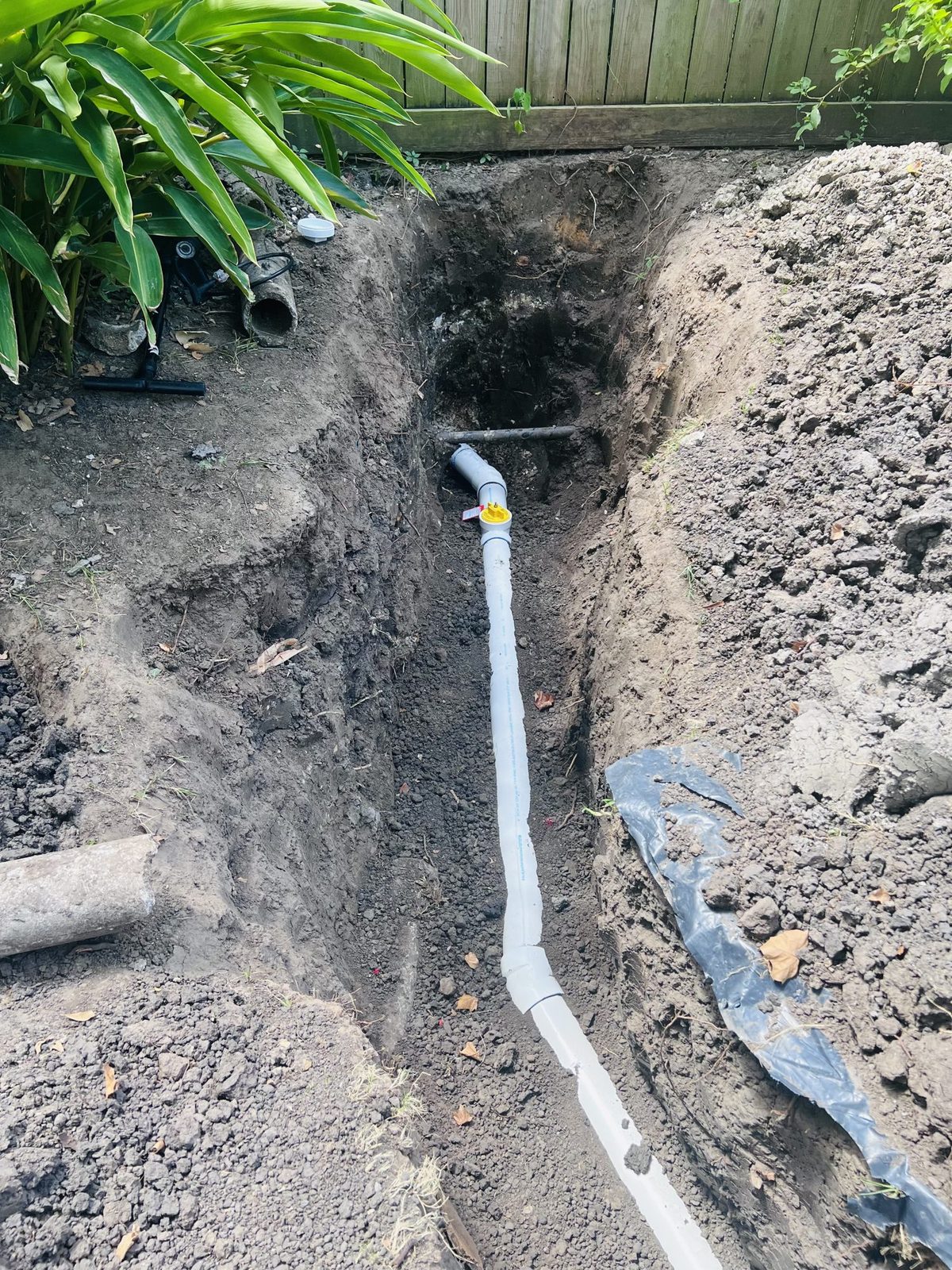
The traditional method is a trench from the house to the cleanout near the property line. The old pipe comes out, new PVC goes in on the correct slope, and the trench is backfilled.
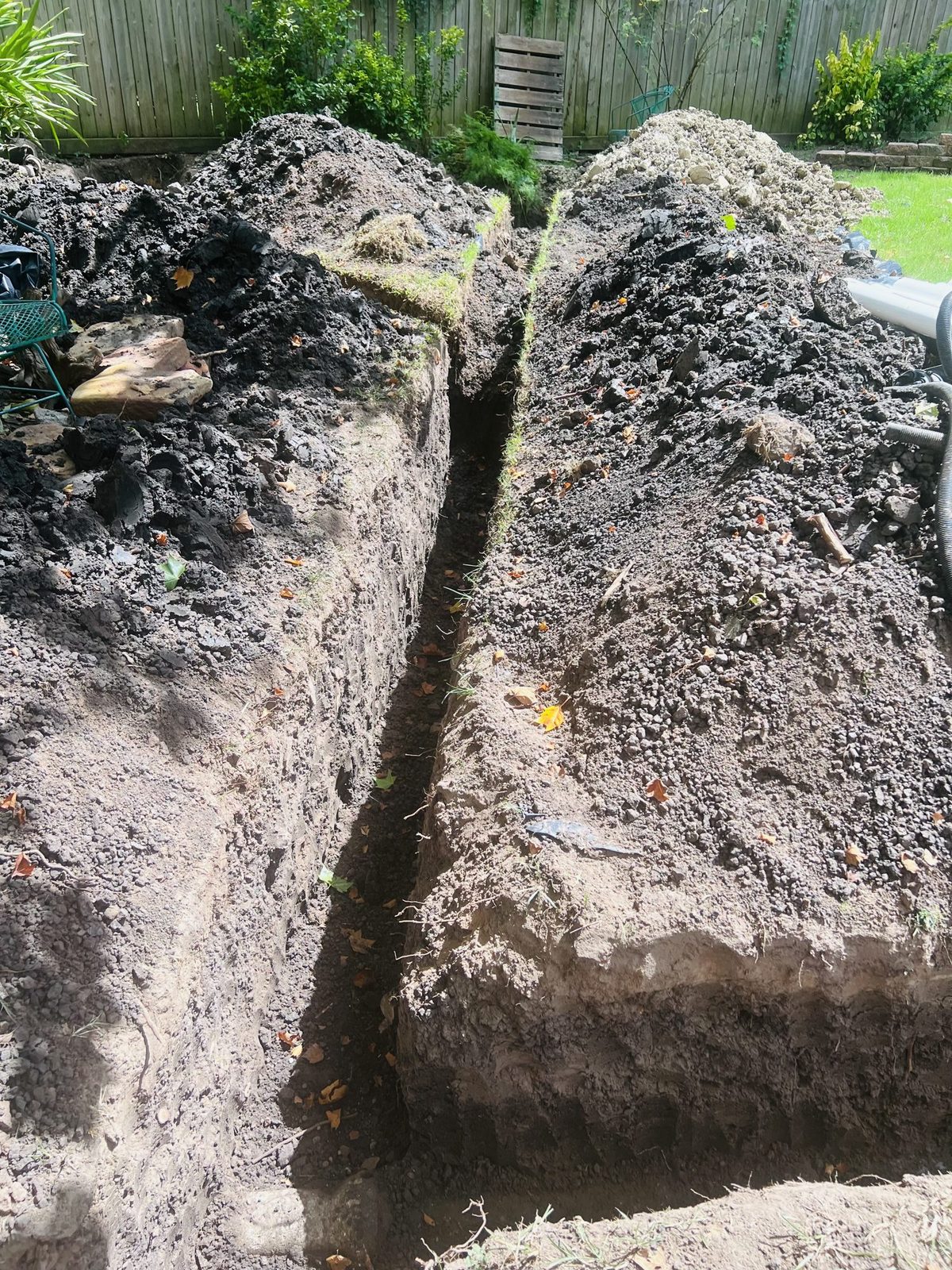
Trenchless methods, such as pipe bursting or lining the old pipe, avoid opening the whole yard. They only work when the existing line is in good enough shape to pull or line through. A collapsed or badly bellied line usually has to be dug.
Under the slab: tunneling vs. breaking the floor
There are two ways to reach pipe under a slab foundation:
- Breaking through from inside. The plumber cuts the slab inside the house, replaces the pipe, and patches the concrete. Your flooring, cabinets or tile come up in those areas.
- Tunneling from outside. The crew digs a tunnel under the foundation from the yard. Floors, tile and cabinets stay where they are, and you can usually stay in the house.
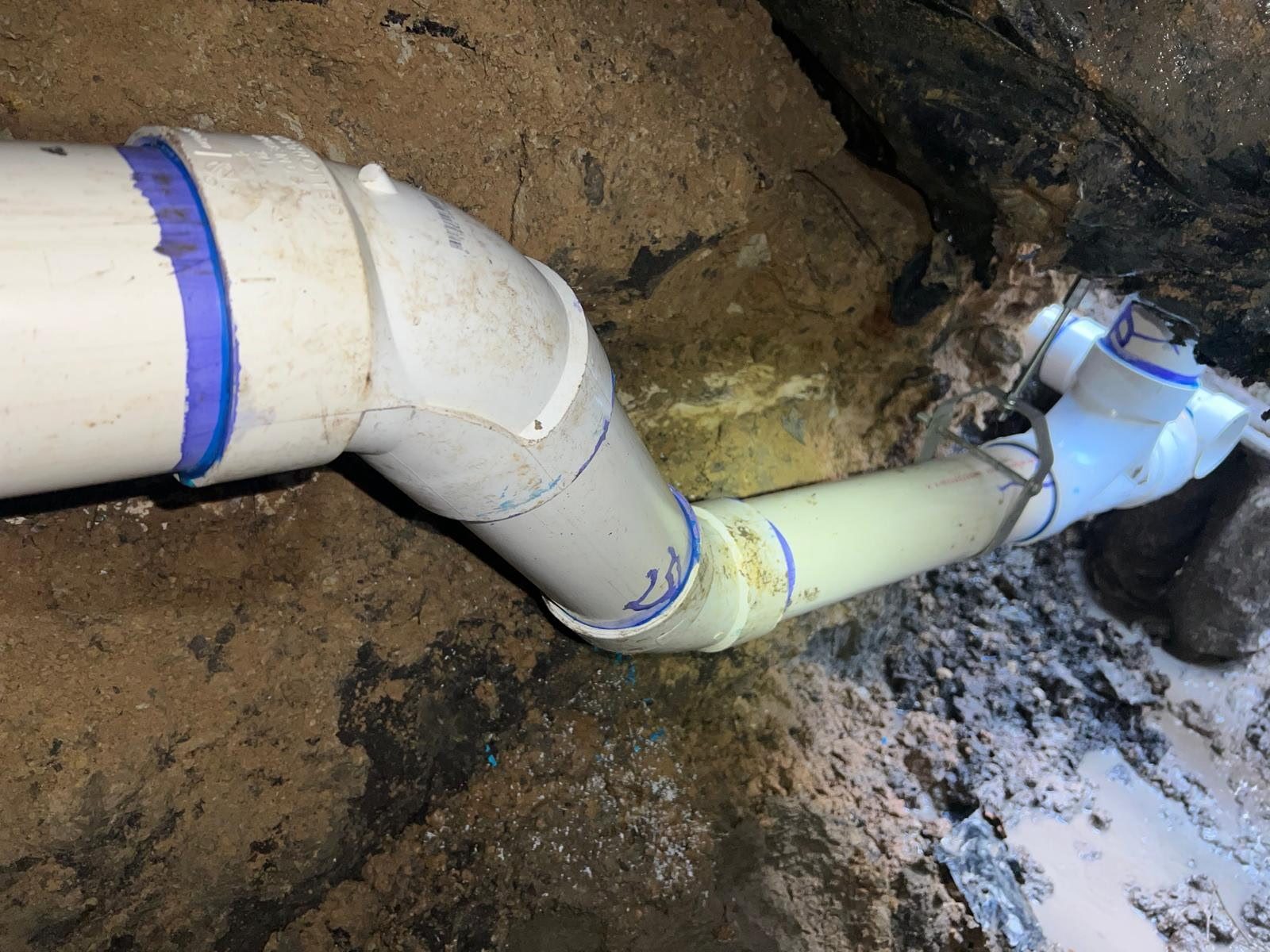
Tunneling is slow, physical work, and it is often priced by the foot. It also has to be backfilled and compacted properly when the job is done. In clay soil, a tunnel that is not filled back correctly can leave a void under the foundation.
TIP: Ask every plumber how they will backfill the tunnel and what material they use. A clear, specific answer is a good sign.
Permits, Inspection, and Who Owns Which Pipe
The City of Houston permit
Sewer line replacement inside the City of Houston needs a plumbing permit through the Houston Permitting Center, normally pulled by the licensed master plumber doing the work. The new line is typically filled and tested, then inspected, before the trench or tunnel is closed.
If you live in a separate city, such as Bellaire, West University Place or Sugar Land, that city runs its own permits and inspections. Either way, a plumber who offers to skip the permit is a red flag. Our guide to how to choose a licensed contractor in Houston covers how to check a license, and our post on unlicensed work and insurance claims covers what skipping the paperwork can cost you later.
Where your pipe ends and the City's begins
Houston Public Works puts it this way: problems with private wastewater pipes, which are typically closer to the home, are the homeowner's responsibility, and problems with public pipes or those on a public right-of-way belong to the City.
The marker is usually the cleanout near the street. Houston Public Works says cleanouts mark the limits of the City's public collection system. In practice, the line from your house to that cleanout is yours to repair or replace.
NOTE: Houston Public Works suggests a simple check during a backup: if sewer water is standing at the cleanout by the street, call 311. If the cleanout is dry, the blockage is on your private line and you need a plumber.
What Sewer Line Replacement Costs in Houston
Every job is different. Length, depth, how much of the line runs under the slab, trenchless vs. dug, and what has to be restored afterward all move the price. Treat these as typical ranges to plan around, not quotes:
- Camera inspection: national cost guides put this at roughly $100 to $500.
- Spot repair of one section in the yard: typically in the low thousands, roughly $1,500 to $5,000.
- Full replacement across the yard, house to cleanout: typically $4,000 to $15,000, depending on length and depth.
- Work under the slab: usually priced per foot of tunnel. National cost guides list roughly $300 to $350 per foot extra for under-slab work. A whole-house job that includes tunneling and branch lines can typically run $15,000 to $30,000 or more.
NOTE: These are broad typical ranges, not Houston price quotes. The only real number comes from a camera inspection and a written estimate from a licensed plumber who has seen your property.
Get the scope in writing: how many feet of pipe, how many feet of tunnel, who pulls the permit, what the backfill is, and what restoration (sod, concrete, landscaping) is included.
If a slab leak on the supply side is part of the picture, our slab leak detection guide covers that side of the job.
When to Call a Pro
Sewer line replacement is not a DIY job. It needs a permit, a licensed plumber, and an inspection, and a mistake under the slab is expensive to undo.
Call a licensed plumber when you see the signs above, before the problem turns into a backup. If sewage is already coming into the house, see our emergency plumber guide for what to do first.
When sewer line work comes our way, Hristo Panov is who we send it to. You can see his license and how to reach him on his Call HTX profile, or read more on the ARG Plumbing site.
Frequently Asked Questions
How much does sewer line replacement cost in Houston?
It depends on length, depth and how much of the line runs under the slab. As typical ranges, a yard-only replacement often runs $4,000 to $15,000, and a whole-house job that includes tunneling under the slab can run $15,000 to $30,000 or more. Only a camera inspection and a written estimate give you a real number.
Who is responsible for the sewer line, me or the City of Houston?
Houston Public Works says problems with private wastewater pipes closer to the home are the homeowner's responsibility, and problems with public pipes or those on a public right-of-way are the City's. The cleanout near the street usually marks where the City's system begins.
Is tunneling under the slab better than breaking up the floor?
Tunneling leaves your floors, tile and cabinets alone, and you can usually stay in the house. It is slower and often priced by the foot, and it has to be backfilled and compacted properly. Breaking through from inside can be cheaper for a short run but means repairing floors afterward.
Do I need a permit to replace a sewer line in Houston?
Yes. Inside the City of Houston, sewer line replacement needs a plumbing permit, normally pulled by the licensed master plumber doing the work, and the new line is inspected before it is covered. Separate cities like Bellaire, West University Place and Sugar Land run their own permits.
How do I know if my sewer line needs to be replaced?
Watch for every drain in the house slowing at once, sewage smell in the yard, a strip of unusually green grass, new foundation cracks, or backups that keep coming back. A camera inspection by a licensed plumber confirms whether you need a spot repair or a full replacement.
Need a pro?
Need a verified Houston plumbing pro?
Every pro on Call HTX is license-verified and someone we vouch for. Connect and call them directly.
Get Trusted HelpHouston areas we serve