Houston Summer AC Maintenance Checklist
A complete maintenance schedule for Houston homeowners — what to DIY, what needs a pro, and how to keep your system running all summer.
Why Houston AC Maintenance Is Different
Most of the country uses their AC about four to five months a year. Houston homeowners run theirs for ten. That extra wear accumulates fast.
Add in the Gulf Coast humidity, hard water mineral deposits, and the near-constant condensate drainage that comes with our climate, and Houston HVAC systems face challenges homeowners in Denver or Dallas simply do not deal with. A standard maintenance checklist from a national home improvement site is not enough here.
This one is built for Houston.
"A 7-year-old coil in Houston looks like a 12-year-old coil in Phoenix."
— Adam Khordaji, Atlas AC & Heat
Your Monthly AC Maintenance Tasks
These are quick, low-effort tasks anyone can do. Skipping them is the most common reason Houston AC systems fail prematurely.
Change or inspect your air filter
In most climates, changing your filter every 90 days is fine. In Houston, plan on every 30 days during summer. Humidity means more particulates in the air, and a clogged filter forces your system to work harder, driving up your energy bill and shortening equipment life.
- Use a MERV 8 to MERV 11 filter for most homes
- Avoid MERV 13+ unless your system is rated for it — too much restriction can damage the blower motor
- Write the date on the filter when you install it so you do not lose track
Check your condensate drain line
This is the single most Houston-specific maintenance item on the list. Because our humidity is so high, your AC's condensate drain line works overtime pulling moisture out of the air. In summer, it can drain several gallons of water per day.
That moisture, combined with Houston's heat, creates the perfect environment for algae and mold to grow inside the drain line. A clogged drain causes water to back up into the drain pan, overflow, and drip into your ceiling or walls.
Every month, pour one cup of distilled white vinegar or a diluted bleach solution (one tablespoon bleach per cup of water) into the drain line access point — usually a PVC pipe with a cap near your air handler. This kills algae before it has a chance to build up.
TIP: If your system has a float switch, test it by slowly pouring water into the drain pan. It should shut the system off before overflow occurs. If it does not, call a technician.
Clear debris around your outdoor unit
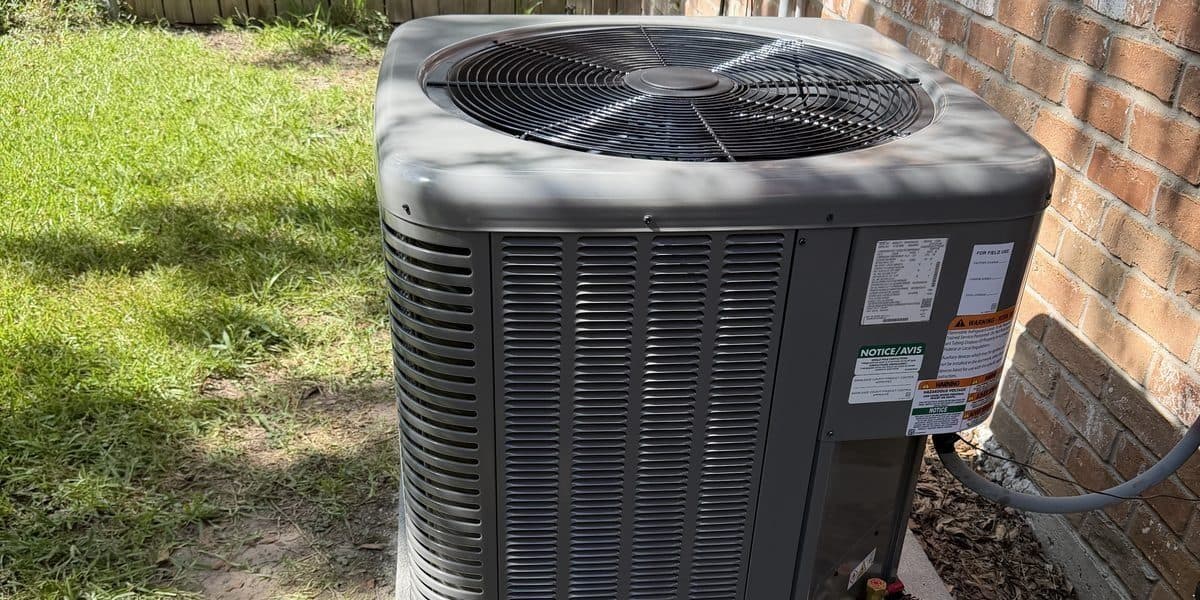
Walk outside and check the condenser unit. Clear any leaves, grass clippings, or overgrown vegetation within two feet of the unit on all sides. Airflow restriction reduces efficiency and can cause the system to overheat.
Do not hose down the coils yourself unless you know what you are doing — bent fins and water forced into electrical components are common DIY mistakes.
Pre-Season Checklist (March–April)
Before the heat arrives is the best time to catch problems and schedule professional service. Use this checklist in early spring.
DIY Tasks
- Replace the air filter with a fresh one
- Test your thermostat — set it to cool and verify the system kicks on properly
- Check all supply and return vents in your home — make sure none are blocked by furniture
- Inspect the condensate drain pan under your air handler for standing water or rust stains, which indicate past drainage problems
- Clear the area around your outdoor unit and visually inspect the unit for damage from winter storms or yard debris
- Check your circuit breaker panel — make sure the AC circuit breaker is not tripped
- Test your carbon monoxide detector if you have a gas furnace paired with your air handler
What to Look For
- Unusual noises when the system starts up (grinding, squealing, or banging)
- Ice forming on the refrigerant lines
- Weak airflow from vents
- Warm air coming out of supply vents when set to cool
- Musty or burning smells when the system runs
WARNING: If you notice ice on your refrigerant lines, turn the system off immediately and call a technician. Running an iced-over system can destroy the compressor — the most expensive component to replace.
What a Professional AC Tune-Up Covers in Houston
Some maintenance tasks require tools, training, and licenses that homeowners do not have. A professional HVAC tune-up in Houston should include all of the following.
Refrigerant Level Check
Low refrigerant is a common cause of poor cooling performance. Only licensed technicians can legally handle refrigerant in Texas. Your tech will check levels and inspect for leaks — not just add refrigerant, which is only a temporary fix if there is an underlying leak.
Coil Cleaning
Your evaporator coil (inside) and condenser coil (outside) both accumulate dirt and grime over time. Houston's hard water also leaves mineral deposits on coils that reduce heat transfer efficiency. A technician will clean both coils with the appropriate chemical cleaners — not a garden hose.
Dirty coils can reduce system efficiency by 30 percent or more.
Electrical Component Inspection
The tech will check capacitors, contactors, and wiring connections. Capacitors are one of the most common parts to fail in Houston summers — the heat is brutal on them. Catching a weak capacitor before it fails costs about $150 to $250. Waiting until it fails can take out the compressor with it.
Blower Motor and Belt Inspection
The blower motor circulates air through your home. The tech will check motor amperage, lubricate bearings if needed, and inspect the belt if your system has one.
Thermostat Calibration
A thermostat that reads two degrees off means your system is constantly over- or under-cooling. Proper calibration keeps your home comfortable and prevents short cycling.
NOTE: Many Houston HVAC companies offer annual maintenance plans ranging from $150 to $300 per year. These typically include one or two tune-ups, priority scheduling, and discounts on repairs. For most homeowners who run their system year-round, a maintenance plan pays for itself.
Houston AC Maintenance Cost Estimates
| Service | Typical Cost Range |
|---|---|
| Standard tune-up / seasonal inspection | $85 – $175 |
| Coil cleaning (evaporator) | $100 – $400 |
| Condensate drain flush (professional) | $75 – $200 |
| Capacitor replacement | $150 – $300 |
| Refrigerant recharge (per pound) | $50 – $150 |
| Annual maintenance plan | $150 – $300/year |
Monthly and Seasonal Schedule at a Glance
Every Month (May–September)
- Replace or inspect air filter
- Pour vinegar down condensate drain line
- Clear debris from around outdoor unit
Every Spring (March–April)
- Schedule professional tune-up before cooling season
- Test thermostat and system operation
- Inspect drain pan and drain line
- Check all vents for blockages
Every Fall (October–November)
- Schedule second professional inspection (recommended for year-round Houston use)
- Clean or replace filter
- Check heating components if you have a heat pump or gas furnace
Annually
- Have refrigerant levels verified by a licensed tech
- Have coils professionally cleaned
- Inspect electrical components including capacitors and contactors
DIY vs. Call a Pro: Quick Reference
Do it yourself:
- Filter changes
- Condensate drain line treatment with vinegar
- Clearing debris around outdoor unit
- Checking vents and thermostat settings
- Visual inspections for obvious issues
Call a licensed HVAC technician:
- Anything involving refrigerant
- Coil cleaning beyond surface-level debris
- Electrical component testing and replacement
- Any repair to the compressor, blower motor, or heat exchanger
- Diagnosing refrigerant leaks
- Installing a new float switch or drain line repair
TIP: In Texas, HVAC contractors must hold a license from the Texas Department of Licensing and Regulation (TDLR). Always verify your technician's license before any repair work begins.
Frequently Asked Questions
How often should I service my AC in Houston?
Twice a year is the right answer for most Houston homeowners. Once in early spring before cooling season starts, and once in fall before you switch over to heating. Because Houston runs AC nearly year-round, the system accumulates more wear than average, and a single annual inspection is not enough to catch developing problems early.
How much does AC maintenance cost in Houston?
A standard seasonal tune-up typically runs between $85 and $175 from a reputable local HVAC company. Annual maintenance plans that include two tune-ups and priority service generally run $150 to $300 per year and are worth considering if your system is more than five years old.
Can I do AC maintenance myself?
Some of it, yes. Replacing filters, treating the condensate drain line with vinegar, clearing debris from the outdoor unit, and checking your thermostat settings are all reasonable DIY tasks. However, anything involving refrigerant, electrical components, or coil cleaning with chemical agents requires a licensed technician.
When is the best time to schedule AC maintenance in Houston?
March and April are ideal. HVAC companies get extremely busy starting in May when the heat kicks in, and scheduling a tune-up during peak season means longer wait times and sometimes higher prices.
Does regular maintenance really extend my AC's life?
Yes, and significantly. The average lifespan of an AC system in Houston is 12 to 15 years with proper maintenance. Neglected systems often fail in 8 to 10 years. The compressor — often costing $1,500 to $3,000 to replace — is particularly sensitive to problems caused by dirty coils, low refrigerant, and failing capacitors. Regular maintenance catches those issues before they cause compressor damage.
Need a pro?
Need a verified Houston hvac pro?
Every pro on Call HTX is license-verified and someone we vouch for. Connect and call them directly.
Get Trusted HelpHouston areas we serve