Why Your Houston Water Bill Is So High (And How to Fix It)
Track down the most common causes of a high water bill in Houston — from running toilets to slab leaks — and what each fix costs.
NOTE: City of Houston water department contacts
- Water bills & meters (Houston Public Works): 713-371-1400, Monday–Friday, 8 a.m.–7 p.m.
- Email: customer.service@houstontx.gov
- Houston 311 (leaks, main breaks, bill appeals, 24/7): dial 311, or 713-837-0311 from outside city limits
- Pay, check usage, or book an in-person or virtual billing appointment: houstonwaterbills.houstontx.gov
Bill looks wrong? Before you pay it, read how to dispute a City of Houston water bill.
A high Houston water bill comes down to one of two things: water is actually leaking somewhere on your property, or the city billed you for water you never used. This guide covers both — how to find and price the leak, and how to get a bad bill corrected.
First, Understand How Houston Charges for Water
The City of Houston uses a tiered rate structure, which means the more water you use, the more you pay per gallon. A typical single-family home uses 3,000–6,000 gallons per month. If you are sitting at 10,000 or 15,000, something is leaking — or something is wrong with the bill.
NOTE: You can review your usage history online at houstonwaterbills.houstontx.gov. If your meter has a newer remote-read device, you can also see daily usage in the Sensus customer portal. Comparing month-over-month consumption is the fastest way to confirm whether you have a new problem or a slow-building one.
Running Toilet: The Silent Thief
A running toilet is the single most common cause of a high water bill Houston homeowners report. The problem is you often cannot hear it — especially with a slow leak past the flapper valve.
A running toilet can waste 200 gallons per day. That is 6,000 gallons in a single month — enough to push you into a higher billing tier all by itself.
How to confirm it: Drop food coloring into the toilet tank. Do not flush. Wait 15 minutes. If color appears in the bowl without flushing, your flapper is leaking.
Cost to fix: A replacement flapper costs $5–$15. If the fill valve also needs replacing, expect $75–$150 for a plumber.
TIP: Check every toilet in the house, not just the one you use most. A guest bathroom toilet that runs undetected for months is a common bill-spiking scenario.
Slab Leak: Houston's Most Expensive Problem
Houston is built on expansive clay soil. That clay swells in wet weather and shrinks in drought. Over years, this ground movement stresses the copper water lines running beneath your home's concrete slab — and eventually, those lines crack.
A slab leak can release hundreds of gallons daily directly into or beneath your foundation.
Cost to fix: Detection runs $150–$500. Repair costs range from $500 for a simple reroute to $3,000–$8,000 or more for major tunneling work.
WARNING: If you suspect a slab leak, do not ignore it. Water beneath your slab erodes the soil supporting your foundation. In Houston's clay-heavy soil, this can cause serious structural problems quickly.
Irrigation System Leaks
A broken zone valve, a cracked lateral line, or a misaligned sprinkler head can bleed water continuously — sometimes underground where you will never see it.
A single broken irrigation head can lose 25,000 gallons per season.
How to confirm it: Run each irrigation zone independently while walking the yard. Look for saturated ground between heads or water bubbling up from soil.
Cost to fix: Replacing a sprinkler head runs $5–$15 in parts plus a service call ($75–$150). Repairing a broken lateral line typically costs $150–$400.
Dripping Faucets
A faucet dripping at one drop per second wastes roughly 3,000 gallons per year. Two or three dripping fixtures in an older Houston home adds up.
Houston's hard water accelerates wear on washers, O-rings, and cartridges inside your faucets.
Cost to fix: A basic faucet washer repair is $50–$100 for a plumber. Full faucet replacement typically costs $150–$350 installed.
TIP: If you have hard water issues — and most Houston homeowners do — consider a whole-home water softener. It protects every fixture, appliance, and pipe in the house.
Faulty Water Softener
If your water softener is malfunctioning, it may be regenerating on a broken cycle and running water continuously. A stuck regeneration cycle can waste 100–200 gallons in a single day.
Cost to fix: A repair call runs $150–$350. Full unit replacement ranges from $600–$1,500 installed.
Bad Meter Reads and Billing Errors
Sometimes there is no leak at all. Houston's water billing problems have been documented for years: broken remote-read devices, estimated readings, and meters that over-register.
In 2026, Houston Public Works admitted it installed the wrong meters at 637 homes during a 2024 replacement program, leading to years of inaccurate bills. KPRC 2 published an address lookup so you can check whether your home is on the list.
What to do: If you cannot find a leak, call the water department at 713-371-1400, dispute the bill, and request a meter test.
How to Check Your Water Meter for Hidden Leaks
- Turn off every water-using fixture in your home — faucets, appliances, ice maker, irrigation system, everything.
- Locate your water meter. In Houston, it is typically in a concrete box near the street.
- Lift the cover and look at the meter face. Note the current reading.
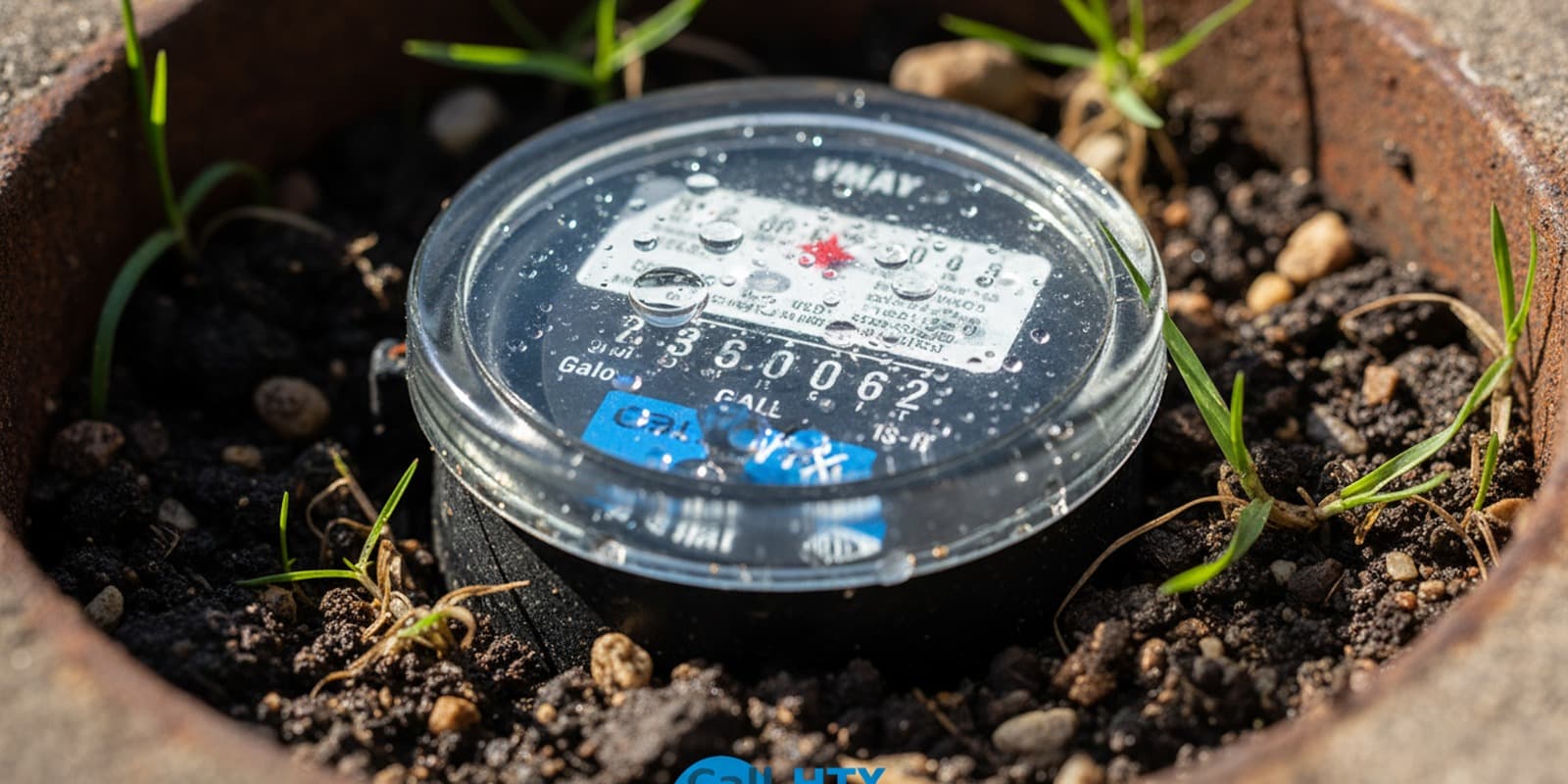
- Look for a small triangular or star-shaped leak indicator dial. If it is spinning with everything off, water is actively moving through the meter.
- Wait 30 minutes without using any water. Return and check the reading again. Any increase confirms a leak.
- Shut off the main valve inside your home. If the meter stops spinning, the leak is inside the house. If it continues, the leak is in the service line between the meter and your home.
NOTE: The supply line from the meter to your home is the homeowner's responsibility in Houston. The City maintains the line from the street to the meter only.
TIP: Newer Houston meter boxes have a lid that is tricky to open. KPRC 2 has a short how-to on opening them.
How to Dispute a City of Houston Water Bill
KPRC 2 Investigator Amy Davis and producer Andrea Slaydon spent more than two years on DRAINED, an investigation into Houston's water billing. It recovered more than $300,000 in refunds and credits for customers, led to criminal charges against seven people in a water contract scandal, and pushed the city to overhaul how it bills. Their advice, condensed from 5 steps to take the minute you get a high water bill and their follow-up reporting:
- Turn off autopay. If you pay a bad bill, the most you will get back is a credit, and an investigation can take months.
- Dispute the bill right away. Call 713-371-1400, email customer.service@houstontx.gov, or call 311 to file an appeal. Write down the date, the name of every representative you talk to, and any ticket number.
- Check whether your read was estimated. Page 2 of your bill shows whether the reading was actual or estimated. Under city code, the city cannot estimate for more than three months in a row before it has to read the meter manually.
- Read your meter yourself. Take a photo of the meter face. The first four digits should be close to the reading on your bill if only a few days have passed.
- Rule out leaks. Repaired leaks can qualify for a leak adjustment, but toilet leaks do not. Keep the plumber's invoice.
- Book a meeting with the water department. In-person appointments run Tuesday through Thursday, 10 a.m.–3 p.m., at 4200 Leeland, with virtual meetings also available. Schedule one at houstonwaterbills.houstontx.gov. KPRC reported that 75% of customers who used these meetings had their problem solved at the first one.
WARNING: Make sure the representative marks your account as disputed. The city says it does not disconnect service while a billing dispute or appeal is open, but you want that on record. If your home was affected by a meter mix-up, do not close your water account until your credit is settled.
TIP: Sign up for the city's Consumption Awareness Program to get text, email, or phone alerts when your usage spikes. You will catch a leak or a bad read weeks before the bill arrives.
If you have gone through the city and still cannot get an answer, KPRC 2 Investigates is still collecting Houston-area water bills. You can reach Amy Davis at ADavis@kprc.com.
KPRC 2's DRAINED Investigation: Stories and Videos
If you are fighting a Houston water bill, these are worth your time. Each one shows a real customer, what went wrong, and how it got fixed.
Start here
- Everything you need to know about the KPRC 2 DRAINED investigation
- 5 steps to take the minute you get a high water bill
- Ask Amy: your FAQ about the Houston water bill improvement plan
- Avoid surprise water bills by tracking your daily usage
Real Houston bills
- Top 5 most outrageous Houston water bills DRAINED helped resolve
- A $38,000 bill and a troubling trend
- Missing water meter found buried under concrete
- Customers overcharged after wrong meter reads
- Check your address: meter mix-up led to years of inaccurate bills
What changed at City Hall
- Houston mayor announces new water bill improvement plan
- Water department ahead of schedule replacing meter sensors
- A timeline of KPRC 2's DRAINED reporting
Watch
- The full DRAINED video series on YouTube
- $15K water bill removed from a single mom after KPRC 2's investigation
- Amy Davis at Houston City Council over water billing
- Ask Amy video series
What Each Fix Actually Costs: Quick Reference
| Problem | DIY Cost | Plumber Cost |
|---|---|---|
| Running toilet (flapper) | $5–$15 | $75–$150 |
| Running toilet (full assembly) | $30–$60 | $150–$250 |
| Dripping faucet | $10–$25 | $75–$200 |
| Irrigation head repair | $10–$20 | $100–$200 |
| Irrigation line repair | Not recommended | $150–$400 |
| Slab leak detection | N/A | $150–$500 |
| Slab leak repair | N/A | $500–$8,000+ |
| Water softener repair | N/A | $150–$350 |
Frequently Asked Questions
What is the City of Houston water department phone number?
For water bills, meters, and account questions, call Houston Public Works customer service at 713-371-1400, Monday through Friday, 8 a.m. to 7 p.m., or email customer.service@houstontx.gov. To report a leak or main break, or to file a bill appeal, call 311 (713-837-0311 from outside city limits), which is open 24/7.
How do I dispute a high water bill in Houston?
Turn off autopay, then call 713-371-1400, email customer.service@houstontx.gov, or call 311 to open a dispute. Write down every representative's name and the date. Check page 2 of your bill for an estimated reading, and book an in-person or virtual meeting at houstonwaterbills.houstontx.gov if the call does not fix it.
What is the average water bill in Houston?
The average Houston residential water bill runs approximately $50–$90 per month for typical single-family usage between 3,000 and 6,000 gallons. Houston's tiered rate structure means households that regularly exceed 10,000 gallons per month will see disproportionately higher charges.
How do I check for a hidden water leak?
The most reliable method is a meter test. Turn off every fixture and appliance in your home, then observe whether the leak indicator on your water meter is spinning. Wait 30 minutes with everything off and check whether the meter reading has increased. Any movement confirms active water loss.
Does the City of Houston adjust bills for leaks?
Yes, for qualifying leaks. You must have the leak repaired and provide documentation, such as a plumber's invoice, then request an adjustment from Houston Public Works. Toilet leaks do not qualify.
How much does slab leak detection cost in Houston?
Professional slab leak detection in Houston typically costs $150–$500 depending on the company and detection method. Given that undetected slab leaks can cause foundation damage in Houston's clay-heavy soil — potentially a $10,000-plus problem — the detection fee is almost always a worthwhile investment.
Need a pro?
Need a verified Houston plumbing pro?
Every pro on Call HTX is license-verified and someone we vouch for. Connect and call them directly.
Get Trusted HelpHouston areas we serve